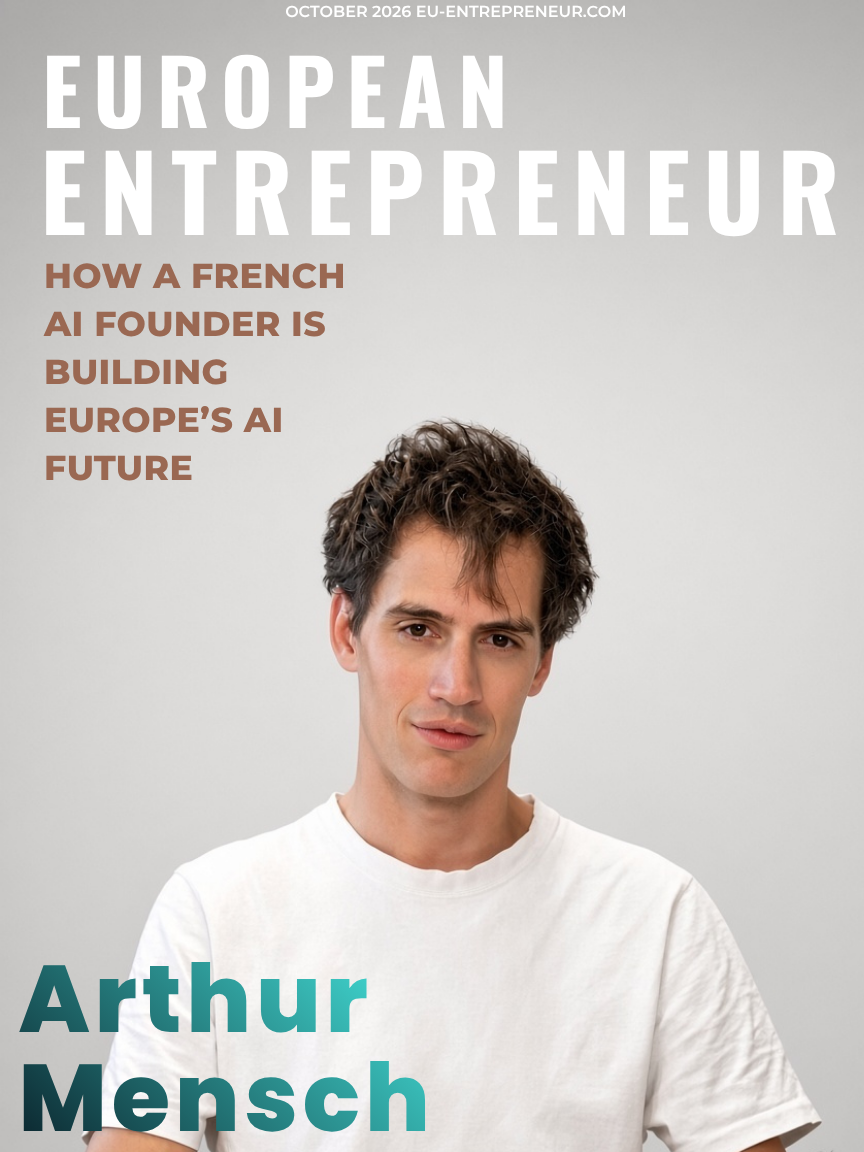
Arthur Mensch: The Leadership Vision Behind Europe’s Ai Ambitions
Arthur Mensch Leadership: How He Is Building Europe’s AI Future
Artificial intelligence is becoming one of the most important competitive battlegrounds in the global economy. From enterprise software and financial services to manufacturing and scientific research, AI is changing how businesses operate and how countries compete for technological influence.
For years, much of the world's AI conversation has been dominated by American technology companies. However, Europe is developing its own ambitions, and French entrepreneur Arthur Mensch is emerging as one of the prominent leaders in that effort.
As co-founder and chief executive of Mistral AI, Mensch is helping build a European AI company designed to compete in a market dominated by exceptionally well-funded global players. His leadership combines advanced research, commercial ambition, strategic fundraising and a strong emphasis on technological independence.
Founded in Paris in 2023, Mistral AI entered the market with a clear proposition: Europe should not merely consume artificial intelligence developed elsewhere. It should have the expertise, infrastructure and companies required to develop and deploy powerful AI systems of its own.
Mensch's journey offers an important leadership lesson for European entrepreneurs. Building a globally competitive technology company requires more than an impressive product. It demands a clear strategic position, the ability to attract exceptional talent, and the discipline to turn technical achievements into sustainable business value.
From AI Research to Entrepreneurial Leadership
Arthur Mensch's professional background is rooted in artificial intelligence research. Before founding Mistral AI, he worked at DeepMind and Meta, gaining experience in the research environments of major international technology companies.
That experience placed him close to the technical developments driving modern AI. It also provided insight into the resources, computing infrastructure and specialist talent needed to develop increasingly capable models.
In 2023, Mensch joined Guillaume Lample and Timothée Lacroix to establish Mistral AI in France. The founders brought complementary technical experience, giving the company a strong foundation in AI research and engineering.
Their decision to establish a European business was strategically significant. Instead of treating Europe primarily as a market for technology developed elsewhere, they set out to create a company capable of developing its own models and serving customers internationally.
This was a demanding ambition. Competing with established technology companies requires access to expensive computing resources, experienced researchers, reliable infrastructure and substantial capital.
Mensch's leadership challenge therefore extended beyond research. He needed to help create an organisation that could move quickly, secure investment, attract talent and build products businesses would actually pay to use.
The transition from scientist to business leader is rarely straightforward. Research rewards experimentation and technical discovery, while commercial leadership requires prioritisation, financial discipline and accountability for results. Mistral AI's development illustrates the importance of bringing these different disciplines together.
A Clear Strategic Position: AI Built in Europe
One of Mensch's most important leadership decisions has been to connect Mistral AI's commercial strategy with Europe's interest in technological independence.
AI systems are becoming deeply integrated into business operations. Companies increasingly use them to analyse documents, write software, support customer service, process information and automate complex workflows.
For organisations handling sensitive information, however, the choice of AI provider involves more than model performance. Data governance, security, regulatory requirements, infrastructure control and long-term supplier dependence can all influence purchasing decisions.
Mistral AI has positioned itself around these concerns, offering models and enterprise services intended to give customers greater choice in how AI is deployed and integrated.
In a September 2026 interview with Le Monde, Mensch argued that AI is software that can be controlled through appropriate engineering, testing and sandboxing. He also highlighted the risks of Europe becoming overly dependent on foreign technology providers.
This position provides Mistral AI with a distinctive commercial narrative. Its potential customers are not necessarily looking only for the most powerful model available. Some also want greater control over their technology stack and more flexibility in how their systems are operated.
The broader leadership lesson is that a company does not always need to win every competition on every dimension. It can build a strong position by identifying a specific customer concern and developing products around it.
For European entrepreneurs, this means understanding where regional expertise, regulatory knowledge, industrial relationships or infrastructure can create a meaningful competitive advantage.
Open Models and the Value of Customer Choice
Another important element of Mistral AI's strategy is its work on open-weight AI models alongside commercial products.
Open-weight models make model parameters available for use under specified licences. Depending on the licence and deployment arrangement, businesses may be able to adapt models, run them in their own environments or integrate them into specialised applications.
This approach differs from relying exclusively on closed systems accessed through a provider's hosted service. It can give organisations greater flexibility, although the level of control depends on the particular model, licence, infrastructure and supporting tools.
For business customers, the benefits can include more tailored deployments, additional control over data flows and the ability to select an architecture that fits their requirements.
For Mistral AI, offering different models and deployment options can widen its potential market. Start-ups may value accessible models, while large organisations may prioritise managed services, customisation, security and technical support.
The leadership insight is that innovation becomes more valuable when customers can use it in practical ways.
A technically impressive model is not automatically a successful business product. Companies must consider how customers will integrate it into existing systems, measure its performance, manage operational risks and justify its cost.
Mensch's challenge is to maintain technical competitiveness while ensuring that Mistral AI's products solve genuine business problems.
Fundraising as a Strategic Leadership Decision
Artificial intelligence is an unusually capital-intensive industry. Training advanced models and serving large numbers of users require significant computing resources, specialised infrastructure and highly skilled employees.
Mistral AI has therefore needed to attract substantial financial backing to pursue its ambitions.
In the September 2026 Le Monde interview, Mensch said the company had raised approximately €6 billion over three years. He also discussed plans to expand computing capacity substantially to support future generations of models.
These figures illustrate the scale of investment required to compete in modern AI. However, raising capital is only one part of the challenge. Leaders must determine how to deploy it effectively.
Investment decisions influence a company's research priorities, infrastructure strategy, hiring plans and ability to respond to competitors. Spending too little can constrain development, while spending without sufficient commercial discipline can create an unsustainable cost structure.
Mensch must balance the need to invest aggressively with the requirement to build a durable business.
That means evaluating which model capabilities matter most, how computing resources should be allocated, which customer segments offer attractive opportunities and how revenue can support future development.
For entrepreneurs, the lesson is straightforward: fundraising should support a clearly defined business strategy. Capital is most valuable when it increases the company's ability to execute, rather than simply making its headline valuation larger.
Building Talent and an Innovation-Driven Culture
AI companies compete intensely for researchers, engineers and infrastructure specialists. Their success depends not only on hiring talented individuals but also on creating an environment where teams can solve difficult problems together.
Mistral AI's founders brought substantial technical expertise to the business, and Mensch has had to help translate that expertise into an organisation capable of developing and commercialising products at scale.
This requires balancing research freedom with business priorities. Researchers need room to experiment, investigate new approaches and challenge assumptions. Product teams, meanwhile, must deliver reliable systems that meet customer expectations.
The two activities must reinforce one another.
A leadership team that focuses exclusively on research may struggle to turn breakthroughs into revenue. A company that concentrates only on immediate commercial demands may fail to develop the technical capabilities needed to remain competitive over the long term.
Mensch's challenge is to preserve the company's technical ambition while building the organisational systems needed for growth.
As Mistral AI expands, this will also involve defining responsibilities, maintaining communication between teams and ensuring that rapid hiring does not dilute the company's standards.
For emerging European technology businesses, this is an important reminder: talent creates potential, but leadership determines whether that potential becomes sustained organisational performance.
Scaling Infrastructure Alongside AI Models
The AI industry is not simply a competition to develop better algorithms. It is also a competition to secure the computing capacity required to train, improve and operate those systems.
Mensch has emphasised that model research alone is insufficient. Companies also need infrastructure capable of serving customers reliably and economically.
This creates a significant challenge for European technology companies. They must compete globally while navigating infrastructure costs, energy requirements, supply constraints and dependence on specialised hardware.
Mistral AI's plans to expand computing capacity reflect the connection between technical progress and operational scale. More computing resources can support research and customer deployment, but they also create substantial financial and operational commitments.
Effective leadership requires understanding the entire technology stack. A model's capabilities matter, but so do its inference costs, latency, reliability, security and integration with customer systems.
Businesses ultimately need solutions that perform consistently under real-world conditions.
For Mensch, the strategic task is to ensure that investment in infrastructure strengthens the company's long-term competitiveness without creating costs that its commercial operations cannot support.
This is a lesson for founders in every technology sector: scaling a product and scaling the systems behind it must happen together.
The Challenge of Competing in a Global Market
Mistral AI operates in a market where competitors possess significant financial resources, established distribution networks and access to large computing ecosystems.
The company must therefore make difficult decisions about where to compete and how to differentiate its products.
It cannot assume that European identity alone will persuade customers to choose its technology. Performance, reliability, price, security and ease of use remain essential.
Its European positioning can open doors, particularly among organisations concerned about technological dependence and data governance. But long-term success requires delivering measurable value.
There is also a broader European challenge. The region has strong research institutions, engineering talent and industrial expertise, yet turning these advantages into globally scaled technology businesses requires coordinated investment, supportive infrastructure and access to customers.
Mensch has argued that public procurement and state-backed support could help Europe strengthen its AI capabilities. Such measures may create opportunities, but they cannot replace competitive products and effective management.
The strongest outcome would be an ecosystem in which European AI companies can attract international customers, develop sustainable revenue and continue investing in research.
That is a much bigger objective than launching an impressive model. It involves building companies that can endure successive waves of technological change.
Leadership Lessons Entrepreneurs Can Learn from Arthur Mensch
Mensch's journey offers several useful lessons for founders and business leaders.
1. Build around a clear strategic conviction. Mistral AI entered the market with a strong view about Europe's role in AI. A clear position helps a company make decisions and explain why customers should care.
2. Turn technical expertise into commercial value. Research is essential, but customers need products that solve real problems. Product development, customer support and commercial execution are as important as technical breakthroughs.
3. Treat capital as a tool, not a destination. Significant funding can accelerate growth, but disciplined investment and a credible path to sustainable revenue remain essential.
4. Compete through differentiation. Businesses do not always need to imitate the largest companies. They can focus on customer needs that competitors have not adequately addressed.
5. Think beyond the product. Infrastructure, talent, governance, distribution and operating costs all influence whether an innovation can succeed at scale.
These lessons are relevant far beyond artificial intelligence. They apply to European start-ups in clean energy, manufacturing, cybersecurity, financial technology and other sectors where technical expertise must be converted into commercial success.
Conclusion: A Leadership Test for Europe's AI Future
Arthur Mensch represents a new generation of European technology entrepreneurs attempting to build globally competitive businesses in strategically important industries.
Through Mistral AI, he is helping advance an alternative vision for artificial intelligence—one that combines research capability, commercial development, customer choice and a stronger European technology ecosystem.
The company's long-term success is not guaranteed. It must continue improving its models, managing infrastructure costs, attracting customers and competing with organisations that possess enormous resources. Its ambitions will ultimately be judged by the quality of its products and the sustainability of its business.
Nevertheless, Mensch's leadership highlights an important principle: Europe does not have to limit itself to adopting innovations developed elsewhere. It can build companies that participate in defining the next generation of technology.
For entrepreneurs, the most valuable lesson is not simply to pursue a bold vision. It is to connect that vision with disciplined execution, talented teams and a clear understanding of what customers need.
In an industry changing as quickly as AI, that combination may prove more important than any single technological breakthrough.

.png)
.png)