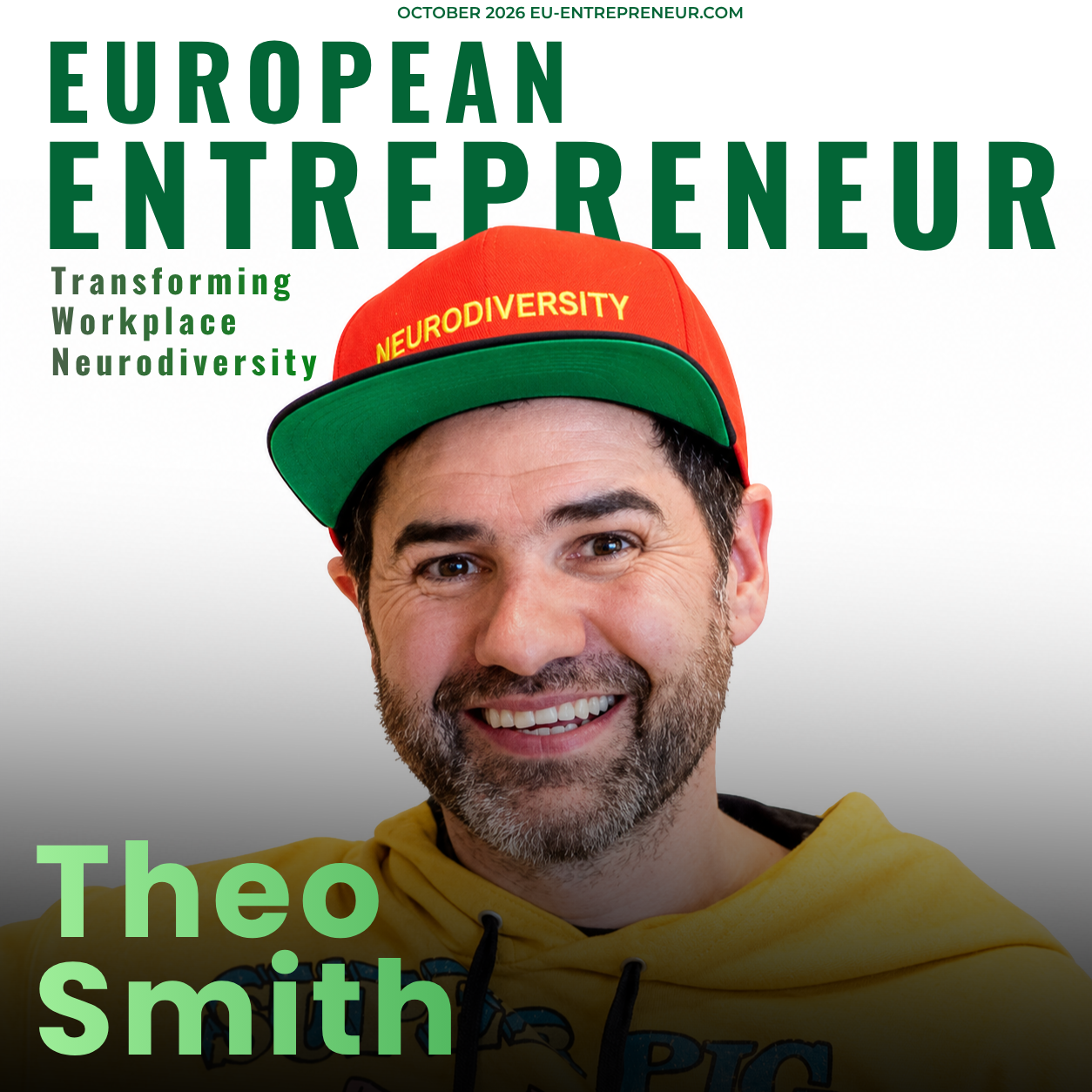
Theo Smith: How The British Leadership Expert Is Transforming Workplace Neurodiversity
Discover how Theo Smith, British entrepreneur, author, and neurodiversity advocate, is transforming workplace culture through inclusive leadership and innovation.
In today's rapidly changing business environment, organisations are beginning to understand that traditional approaches to leadership and recruitment may not be enough to unlock the full potential of their workforce. Businesses need leaders who can challenge established thinking, encourage innovation, and create workplaces that value different perspectives.
One professional making a significant contribution to this transformation is Theo Smith, a British leadership expert, entrepreneur, author, and internationally recognised advocate for neurodiversity in the workplace.
Through his work in human resources, recruitment, consulting, public speaking, and entrepreneurship, Smith has been helping organisations rethink how they attract, support, and develop talent.
His journey demonstrates an important lesson for modern business leaders: building a successful organisation starts with understanding the people who make it possible.
From Professional Acting to Business Leadership
Theo Smith's professional journey is an example of how an individual's career can evolve through curiosity, experience, and a willingness to explore new opportunities.
Before entering the world of human resources and recruitment, Smith began his career as a professional actor. This early experience gave him exposure to communication, storytelling, performance, and the importance of understanding people.
He later moved into the recruitment and employment sector, where he spent more than 15 years developing his expertise in talent management, recruitment strategy, and workplace culture.
Over time, his professional focus expanded beyond traditional recruitment. He began exploring how organisations could create more inclusive environments and recognise the different ways people think, communicate, and perform.
This transition helped shape the leadership philosophy that defines much of his work today.
Rather than viewing professional success through a single traditional model, Smith encourages organisations to recognise that people have different strengths, working styles, and ways of solving problems.
His career reflects an important lesson for aspiring entrepreneurs and business leaders: professional growth does not always follow a straight line. Sometimes, the experiences that appear unrelated to business become the foundation for a distinctive leadership approach.
Building a Business Around a Meaningful Mission
As the founder of Neurodiversity at Work, Smith has developed a professional platform focused on helping organisations understand and implement neuroinclusive workplace practices.
The mission is particularly relevant in a business world where companies increasingly depend on creativity, problem-solving, adaptability, and innovation.
Neurodiversity refers to the natural differences in how human brains function and process information. It includes people with different cognitive experiences and ways of thinking, including autism, ADHD, dyslexia, and other neurological differences.
However, many workplaces continue to rely on recruitment processes, communication styles, and management systems designed around a narrow understanding of how employees should work.
Smith's work challenges this approach.
Through consulting, keynote speaking, workshops, and practical guidance, he helps organisations identify barriers that may prevent talented individuals from performing at their best.
His approach highlights an important principle of entrepreneurship: a successful business does not always begin with an entirely new product or technology. Sometimes, it begins by identifying a problem that existing systems have overlooked and developing a practical solution.
For Smith, that problem is the gap between the potential people possess and the opportunities traditional workplaces provide.
Redefining Leadership Through Neuroinclusion
One of the most important aspects of Smith's leadership philosophy is the belief that organisations should adapt their working environments to support different individuals rather than expecting everyone to fit into the same structure.
Traditional leadership models often emphasise consistency. Employees are expected to follow similar processes, communicate in similar ways, and demonstrate their capabilities through standardised assessments.
While consistency can help businesses maintain structure, it can also create unnecessary barriers.
For example, a recruitment interview that depends heavily on quick verbal responses may fail to recognise a candidate who performs exceptionally well when given time to organise their thoughts.
Similarly, an employee who struggles with an open-plan office environment may still produce outstanding work when provided with a quieter space.
Smith's work encourages leaders to examine these situations more carefully.
Instead of asking why an individual cannot adapt to a particular system, leaders should consider whether the system itself could be improved.
This approach does not require organisations to abandon performance expectations. Rather, it encourages them to create fairer conditions in which employees can demonstrate their capabilities.
For entrepreneurs building teams, this lesson is especially valuable. A company may overlook exceptional talent simply because its recruitment and management processes are designed around assumptions rather than actual performance.
Turning Awareness Into Practical Business Change
Raising awareness about workplace inclusion is important, but awareness alone does not necessarily create meaningful change.
One of the defining characteristics of Smith's work is his focus on practical implementation.
Through his consulting and speaking activities, he encourages organisations to move beyond general discussions about diversity and examine the everyday systems that influence employee experiences.
These systems include recruitment procedures, workplace communication, management practices, employee development, and organisational culture.
For example, businesses can make recruitment more inclusive by providing clear information about interview expectations, offering different ways for candidates to demonstrate their abilities, and ensuring that job descriptions focus on essential skills rather than unnecessary requirements.
Managers can also improve employee experiences by communicating expectations clearly, providing written follow-ups, and allowing reasonable flexibility in how work is completed.
Such changes may appear small, but they can have a meaningful impact on employee confidence, productivity, and engagement.
For business leaders, Smith's approach demonstrates that effective leadership is not always about introducing large-scale transformation programmes. Sometimes, meaningful progress begins with identifying everyday challenges and addressing them consistently.
The Power of Research, Communication, and Storytelling
Smith's professional background combines recruitment experience with communication, public speaking, writing, and consulting.
This combination allows him to approach workplace challenges from both a strategic and human perspective.
His work includes helping business leaders understand neurodiversity through practical examples, research-informed insights, and real-world experiences.
As a co-author of the award-winning book Neurodiversity at Work: Drive Innovation, Performance and Productivity with a Neurodiverse Workforce, Smith has contributed to the growing conversation about how organisations can benefit from recognising different ways of thinking.
The book received the Business Book Awards' recognition in the Diversity, Equity and Inclusion category in 2022.
His work as a speaker and podcast host also allows him to connect with audiences beyond traditional business settings.
Through conversations, presentations, and educational content, Smith helps make complex workplace topics more accessible to leaders, managers, employees, and entrepreneurs.
This highlights another important leadership lesson: knowledge becomes more valuable when it can be communicated clearly and translated into action.
Entrepreneurship and the Future of Inclusive Technology
Smith's entrepreneurial activities also extend into technology.
His work with Neuromine, a technology startup focused on neurodiversity solutions, reflects the growing opportunity to use innovation to address challenges in the workplace.
As artificial intelligence and digital tools become increasingly integrated into recruitment and employee management, businesses must consider how these technologies affect different groups of people.
Technology can help organisations improve accessibility, personalise workplace support, and make certain processes more efficient.
However, technology can also introduce new barriers if it is designed without considering the diversity of human experiences.
For example, automated recruitment systems may unintentionally disadvantage candidates whose communication styles or career histories differ from conventional expectations.
This makes inclusive design an important consideration for entrepreneurs developing workplace technology.
Smith's work highlights the importance of ensuring that innovation serves people rather than simply making existing systems faster.
For future business leaders, this is a powerful reminder that technological progress and human understanding should develop together.
Leadership Lessons Entrepreneurs Can Learn From Theo Smith
Theo Smith's professional journey offers several valuable lessons for entrepreneurs, startup founders, and established business leaders.
1. Recognise Potential Beyond Traditional Expectations
Successful organisations need people with different strengths and perspectives. Leaders should avoid relying exclusively on conventional indicators of talent and instead focus on the capabilities individuals can bring to their teams.
2. Challenge Systems That Limit Performance
When employees struggle, leaders should examine the processes and environments surrounding them. Improving the system may produce better results than expecting every individual to adapt to it.
3. Turn Purpose Into Practical Action
A meaningful business mission becomes more powerful when it leads to measurable changes. Leaders should focus on practical improvements that make their organisations more effective and inclusive.
4. Communicate With Empathy
Leadership requires more than giving instructions. Understanding employee experiences, listening carefully, and communicating clearly can strengthen trust and improve collaboration.
5. Make Innovation Human-Centred
Businesses should evaluate innovation not only through efficiency and profitability but also through its impact on people. Technology and organisational change should create opportunities rather than unnecessary barriers.
The Future of Leadership: Designed for Humans
As businesses prepare for the future, leadership will increasingly depend on the ability to understand human differences and create environments where people can perform at their best.
The rise of artificial intelligence, changing employee expectations, and increasing competition for skilled talent are encouraging organisations to rethink how they operate.
In this environment, leaders who understand people will have an important advantage.
Theo Smith's work represents a growing movement toward a more human-centred approach to business. His professional journey from acting to recruitment, consulting, entrepreneurship, and neurodiversity advocacy demonstrates how diverse experiences can contribute to a meaningful leadership mission.
His work also highlights an important opportunity for European businesses. Organisations that recognise different ways of thinking and create inclusive systems may be better positioned to attract talent, encourage innovation, and build stronger workplace cultures.
Conclusion
Theo Smith's leadership journey demonstrates that meaningful business transformation often begins with a simple question: are organisations truly designed to help people succeed?
Through his work in neurodiversity, recruitment, consulting, technology, and public speaking, Smith continues to encourage businesses to rethink traditional assumptions about talent and workplace performance.
His approach reminds entrepreneurs that leadership is not simply about directing people toward a common goal. It is about understanding what enables individuals to contribute their best work.
For modern business leaders, the lesson is clear: the future of successful organisations will depend not only on technology, strategy, and financial performance, but also on their ability to recognise human potential.
By placing people at the centre of business decisions, leaders can build organisations that are not only more inclusive but also more innovative, resilient, and prepared for the future.
Theo Smith's story is a reminder that the most meaningful leadership transformations happen when businesses stop asking people to fit into outdated systems and start building systems that help people thrive.

.png)
.png)