Elon Musk’s Flying Tesla: The Leadership Vision Behind The Roadster Revolution
Elon Musk’s Flying Tesla: Leadership Lessons Behind the New Roadster
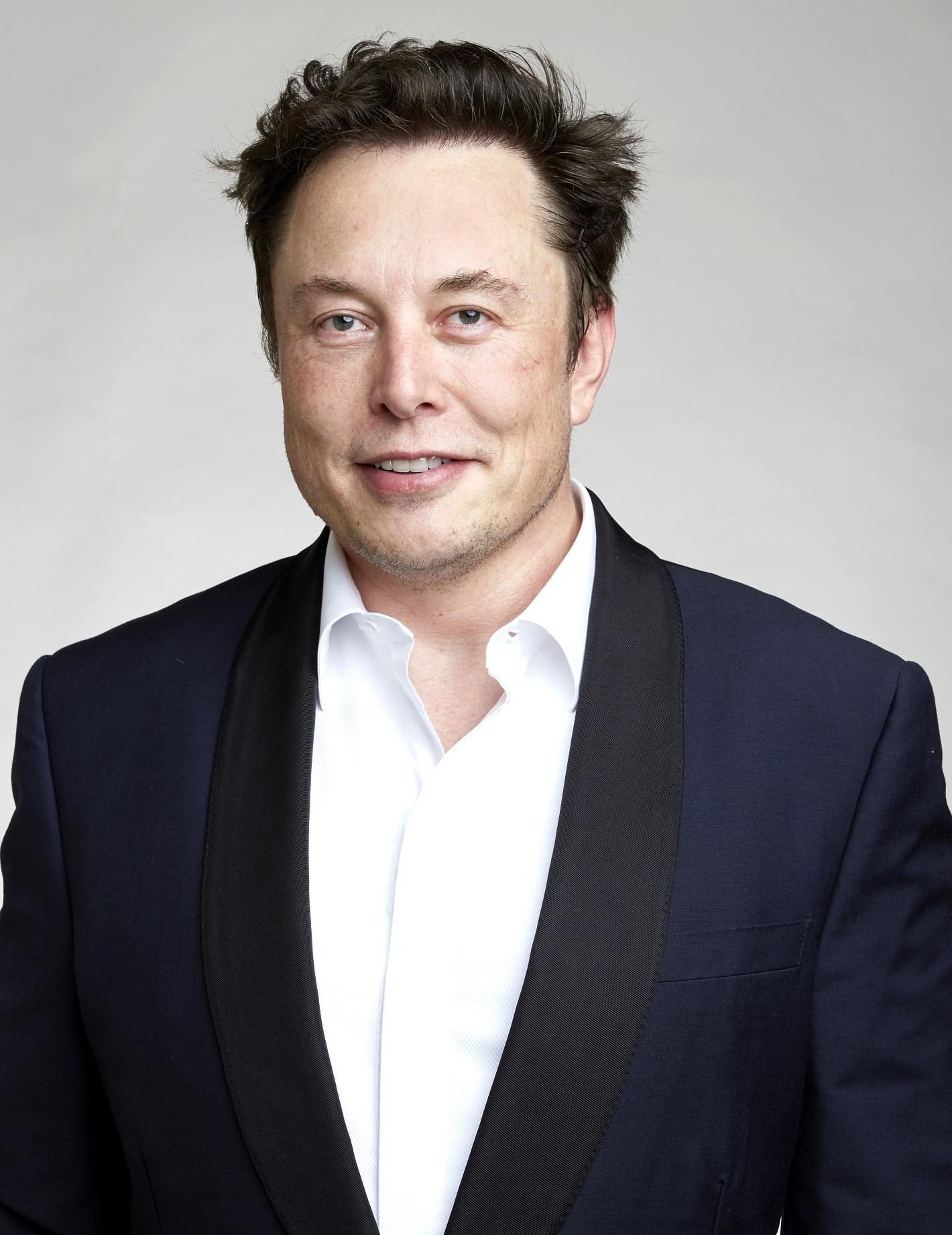
Elon Musk has built his business reputation around a simple but controversial idea: industries can be transformed when leaders challenge assumptions that competitors consider impossible.
From electric vehicles to reusable rockets, his companies have pursued technologies that once appeared commercially unrealistic. His latest headline-grabbing project brings this philosophy back to the automotive industry.
On October 15, 2026, Tesla demonstrated its long-awaited next-generation Roadster at a SpaceX facility in Texas. The demonstration featured a vehicle equipped with rocket-style thrusters that briefly lifted it into the air and performed dramatic manoeuvres. Musk described the development as evidence that flying cars are becoming a reality.
The demonstration attracted international attention, but the distinction between a flying-car concept and a practical transportation product remains important. Tesla has said that production is planned for 2028, while the version equipped with the full flight system is not approved for public-road use. The company has also not established a public timeline for regulatory approval of its airborne capabilities. Source: Reuters.
For entrepreneurs and business leaders, the story is about more than an extraordinary car. It offers a case study in ambitious product development, the value of engineering experimentation, the power of brand positioning and the risks of promising a future that has not yet arrived.
1. Elon Musk’s Leadership Philosophy: Challenge the Limits
Musk's leadership style is built around pursuing goals that require substantial technological change. At Tesla, the broader ambition has been to accelerate the adoption of electric vehicles. At SpaceX, it has involved reducing the cost of spaceflight through reusable rocket technology.
The new Roadster combines elements of these two worlds. Tesla contributes its automotive engineering and electric-powertrain expertise, while SpaceX technology is being used for the flight-capable concept.
During the October demonstration, the vehicle used cold-gas thrusters to produce brief airborne movements. Tesla also showcased a suction-based system designed to help the car maintain contact with surfaces during unusual manoeuvres.
This is a more experimental direction than the traditional sports-car development process, where performance is usually measured through acceleration, handling, braking and top speed.
The leadership lesson is that innovation can emerge when organisations bring different technical disciplines together. A problem that appears difficult within one industry may offer new possibilities when engineers borrow ideas from another.
However, challenging conventional limits is not the same as proving that every ambitious idea is practical. Leaders must distinguish between what can be demonstrated under controlled conditions and what can be manufactured, maintained and operated safely at scale.
2. The Roadster: A Vision Years in the Making
Tesla first unveiled its second-generation Roadster in 2017, initially targeting production in 2020. The project experienced repeated delays, and the October 2026 demonstration came years after its original introduction.
The long development period illustrates both sides of Musk's approach to leadership.
On one hand, maintaining an ambitious project over several years can allow engineers to pursue technologies that require significant experimentation. A product designed to combine electric-car performance with rocket-inspired propulsion naturally presents unusual engineering challenges.
On the other hand, extended delays can damage customer confidence. People who reserve products make decisions based on the information available at the time, and repeatedly postponed delivery dates can create frustration.
This tension matters for every entrepreneur. A compelling vision can attract employees, investors and customers, but the organisation must eventually convert that vision into reliable execution.
Leaders should communicate what has been achieved, what remains experimental and which milestones are still uncertain. Doing so allows customers to understand the difference between an announced ambition and a finished product.
For Tesla, the Roadster's next challenge is not simply to repeat an impressive demonstration. It is to show that the technology can become a viable product with a credible production plan.
3. Why the Flying-Car Concept Matters for Tesla’s Brand
The Roadster is not expected to be a mass-market vehicle. Its importance may lie partly in its ability to attract attention and reinforce Tesla's image as a technology company.
High-performance products can function as what the automotive industry calls halo cars: vehicles that showcase a company's engineering capabilities and strengthen interest in its broader brand.
The original Tesla Roadster helped demonstrate that an electric vehicle could be desirable as well as environmentally conscious. The new generation seeks to take that idea further by combining extreme acceleration with a highly unusual propulsion concept.
The latest reveal also generated a global news cycle, bringing Tesla back into conversations about advanced automotive engineering.
This is valuable in a competitive market where established manufacturers and new electric-vehicle companies are fighting for customer attention. A distinctive flagship product can give a brand a story that competitors cannot easily reproduce.
Yet publicity should not be confused with commercial success. A spectacular product reveal does not automatically translate into profitable sales, and a limited-production vehicle may have little direct effect on a company's overall financial performance.
For business leaders, the takeaway is to understand what a flagship project is designed to accomplish. Is it expected to generate substantial revenue, attract customers to other products, demonstrate new technology or strengthen the company's reputation? Clear objectives make it easier to judge whether the investment is working.
4. Cross-Industry Innovation: Bringing Tesla and SpaceX Together
One of the most interesting aspects of the Roadster project is the collaboration between Tesla and SpaceX, two organisations associated with Musk.
Automotive engineering and aerospace engineering operate under different constraints, but they share areas of expertise, including materials, energy management, control systems and performance optimisation.
Bringing these disciplines together creates opportunities to explore unconventional solutions. In the Roadster demonstration, rocket-inspired propulsion became part of an automotive concept rather than remaining confined to spacecraft.
This illustrates an important principle of innovation: breakthroughs do not always come from inventing an entirely new technology. Sometimes they emerge from applying existing knowledge in a different context.
Entrepreneurs can adopt the same approach without owning a car company or a rocket business. A logistics startup might apply machine-learning tools developed for financial forecasting. A manufacturer might use aerospace-inspired materials to reduce product weight. A software business might adapt cybersecurity techniques to protect a different category of customer.
The challenge is to identify which technologies genuinely solve a problem and which are attractive mainly because they are novel.
For the Roadster, the key question is whether its flight-related systems can deliver a sufficiently useful benefit to justify their cost, complexity and safety requirements.
5. Bold Engineering Must Be Matched by Safety and Regulation
A vehicle that briefly leaves the ground raises questions that ordinary sports cars do not face.
Road vehicles must satisfy safety standards, while aircraft operate under a different regulatory framework. A car that incorporates airborne propulsion creates additional questions about where it may operate, how it should be tested and which authorities have jurisdiction over particular functions.
Tesla's flight-capable Roadster is not approved for public-road use in its demonstrated configuration. The full flight-system version has been described as available by invitation only, while the more conventional Roadster configurations are intended for driving. Source: CBS News.
The company also has not publicly demonstrated that the concept can safely operate as an everyday airborne transportation system.
This does not mean experimental engineering should stop. It means that the ambition must be supported by rigorous testing, transparent limitations and a credible path toward compliance.
For leaders in any industry, safety and regulation should be treated as essential parts of product design rather than obstacles to be considered only after development.
The more unconventional a product becomes, the more important it is to understand the risks it introduces for customers, employees and the public.
6. Managing Expectations: The Difference Between a Prototype and a Product
One of the central leadership challenges surrounding the Roadster is expectation management.
The public demonstration showed a vehicle performing unusual manoeuvres under controlled conditions. That is an engineering milestone, but it does not establish how the product will perform in ordinary use, how much it will cost to maintain or whether its flight capabilities will receive the necessary approvals.
Tesla says production is planned for 2028. Until production vehicles are delivered, however, that date remains a target rather than proof of commercial availability.
This distinction is particularly important because the Roadster has been delayed repeatedly since its original unveiling.
For entrepreneurs, a useful lesson is to break large ambitions into measurable stages. A company developing a complex product might separately report prototype completion, independent testing, regulatory approval, manufacturing readiness and customer deliveries.
Each milestone answers a different question. A prototype shows that a concept can be built. Testing evaluates whether it performs reliably. Certification addresses applicable requirements. Manufacturing demonstrates whether the product can be produced consistently.
Clear milestones can help maintain enthusiasm without encouraging customers or investors to assume that every technical promise has already been fulfilled.
7. What Entrepreneurs Can Learn From Musk’s Approach
The Roadster story offers several practical lessons for business leaders.
Think beyond established conventions. Competitive markets reward businesses that find new ways to solve important problems. Leaders should encourage teams to question assumptions and investigate unconventional approaches.
Combine expertise across disciplines. Collaboration between different technical teams can produce solutions that would be difficult to develop within a single field. Businesses should look for complementary skills and technologies.
Use flagship projects strategically. An ambitious product can attract attention and communicate a company's technical identity. However, its objectives should be clear, and leaders should assess whether the investment creates value beyond publicity.
Turn vision into milestones. A powerful long-term goal needs a practical delivery plan. Progress should be measured through evidence, not simply through announcements or demonstrations.
Treat trust as a business asset. Customers may accept uncertainty when it is communicated honestly. Repeated delays and unclear expectations, however, can weaken confidence. Credibility depends on aligning promises with demonstrated progress.
Make safety part of innovation. Experimental products must be evaluated against the risks they create. A breakthrough is valuable only when it can be developed and used responsibly.
These principles apply to startups, established businesses and technology companies alike. Entrepreneurs do not need to build a flying car to benefit from the leadership lessons behind the project.
Conclusion: The Future Belongs to Leaders Who Can Execute
Elon Musk's latest Tesla Roadster demonstration captures the appeal and complexity of ambitious leadership. By combining electric-vehicle engineering with rocket-inspired propulsion, Tesla has presented a concept designed to challenge traditional expectations of what a sports car can do.
The demonstration is an attention-grabbing step, but significant questions remain about production, cost, safety, regulation and the practical value of the flight-capable system.
For Musk, the challenge is to translate the spectacle into a credible product. For entrepreneurs, the broader lesson is that vision and execution must work together.
Bold ideas can open new possibilities, attract talented teams and distinguish a company from its competitors. Sustainable business success, however, depends on more than the ability to imagine the future. It requires disciplined engineering, transparent communication, responsible risk management and consistent delivery.
The Roadster may or may not become a practical flying vehicle. Its most important leadership lesson is already clear: ambition creates attention, but execution earns trust.

.png)
.png)