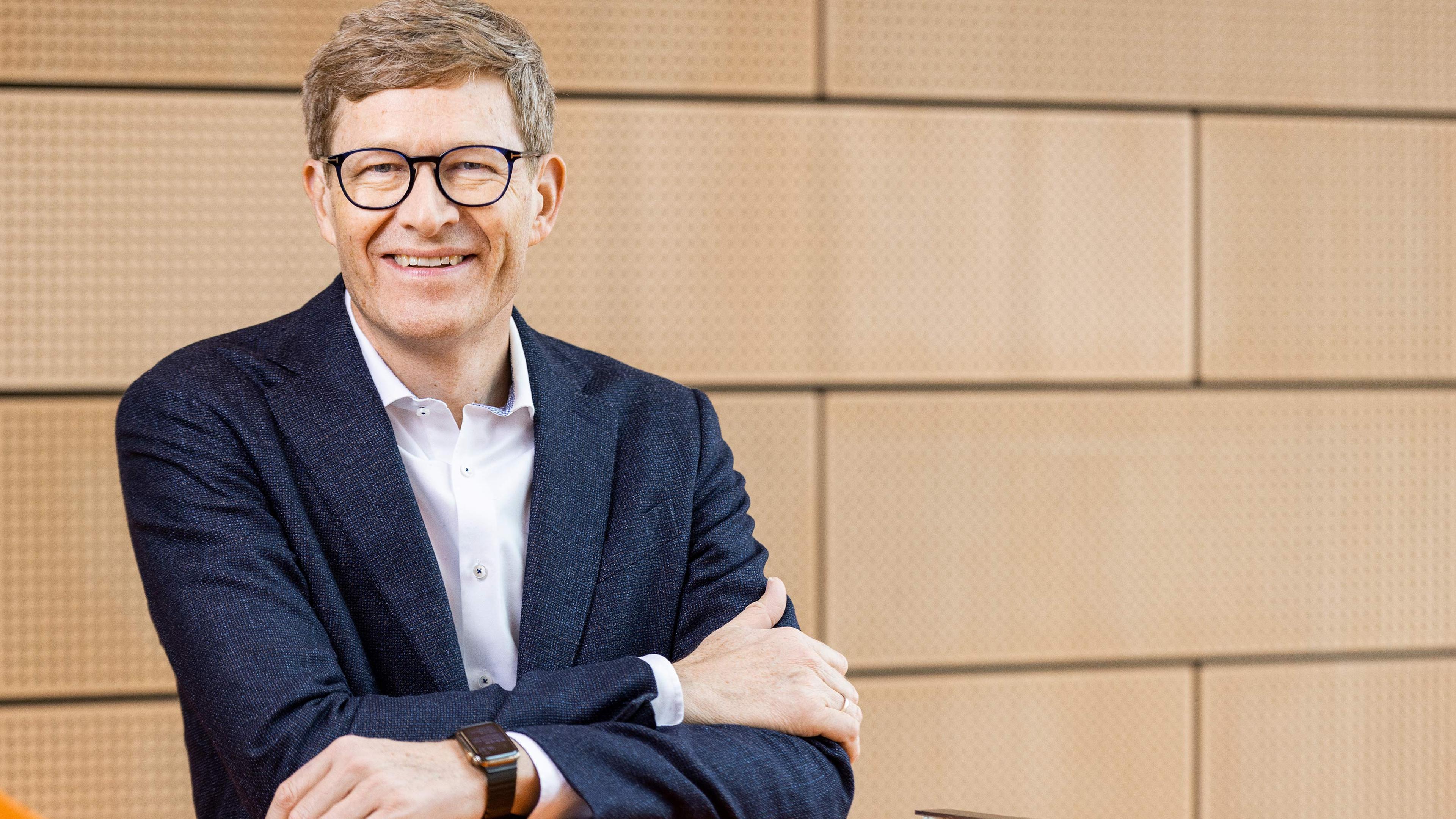
Marta Ortega: The Leadership Vision Shaping Zara’s Global Future
Marta Ortega Leadership: The Strategy Behind Zara’s Global Success

In the global fashion industry, leadership is measured by more than the ability to create popular products. It requires an understanding of changing consumer behaviour, the courage to make long-term investments, and the discipline to maintain a consistent business strategy in an unpredictable market.
Marta Ortega Pérez, Chairperson of Inditex, the Spanish retail group behind Zara, represents an important example of this modern leadership approach. Leading one of Europe's most influential fashion businesses means balancing creative ambition with commercial performance, technological change and increasingly complex customer expectations.
Ortega assumed the chairperson role in April 2022, succeeding Pablo Isla. As the daughter of Inditex founder Amancio Ortega, she inherited a company with an established global presence and a distinctive business model. However, her challenge is not simply to preserve what already works. It is to help ensure that the business remains relevant as the fashion industry evolves.
Inditex celebrated the 50th anniversary of Zara's first store in 2025. That milestone offered an opportunity to reflect on the company's history while considering what its next chapter might look like. In its 2025 financial year, Inditex generated approximately €39.9 billion in revenue and €6.2 billion in net profit, demonstrating the scale of the business Ortega helps oversee.
Her leadership offers valuable lessons for entrepreneurs and executives seeking to build organisations that combine a strong identity with the ability to adapt.
1. Understanding the Business Before Leading It
One of the most important aspects of Marta Ortega's leadership story is her experience within the fashion business before becoming chairperson.
She joined Inditex in 2007 and worked in different areas of the company, including retail operations. This experience helped her develop an understanding of the relationship between the product, the customer and the retail environment.
For a global fashion business, this connection matters. Leadership decisions made at headquarters ultimately influence what customers see in stores, how employees serve them and how quickly the organisation responds to changes in demand.
Ortega's background also reflects a broader lesson about leadership succession. Taking responsibility for a large organisation requires more than a title or a family connection. It demands familiarity with the business, its people and its operating culture.
For entrepreneurs, the takeaway is straightforward: leaders should understand the practical realities of their organisations. Spending time with customers, frontline employees and operational teams can reveal problems that financial reports alone may not show.
This principle becomes even more important as companies expand. The larger a business becomes, the easier it is for senior executives to become disconnected from everyday customer experiences.
2. Protecting Zara's Identity While Encouraging Change
Zara's success has long depended on its ability to respond to changing fashion preferences without losing its recognisable identity.
Unlike businesses that rely on a small number of products or seasonal campaigns, Zara operates in an environment where customer interests can change rapidly. The company must interpret emerging preferences, develop products and make them available through a network of physical stores and digital channels.
Ortega's leadership places continued emphasis on creativity, product quality and the customer experience. At the same time, Inditex's wider strategy demonstrates that maintaining a brand's identity does not mean refusing to change.
This distinction is important. Some businesses become so attached to their original success that they struggle to adapt when customers move on. Others change so frequently that they lose the qualities that made them distinctive.
The challenge is to understand which elements should remain consistent and which should evolve.
For Zara, the enduring principles include fashion relevance, accessibility and responsiveness. The way these principles are delivered can change through better technology, improved stores, more efficient logistics and new digital experiences.
For business leaders, this offers a useful framework: protect the core promise of the brand while continually improving how customers experience it.
3. Making Customer Behaviour Central to Strategy
Customer-focused leadership is easy to describe but difficult to execute consistently across an international organisation.
Inditex operates multiple retail formats across different markets, each serving customers with distinct preferences. A strategy that works in one country may not translate perfectly to another.
The group's business model places significant importance on responding to customer demand and adapting its product offering. Its integrated operations help connect commercial decisions with sourcing, distribution, stores and online platforms.
This matters because fashion retailers face two competing risks: producing too much of a product that fails to sell and missing an opportunity when demand is stronger than expected.
A responsive operating model can help businesses manage these risks more effectively, although it cannot eliminate uncertainty.
Ortega's leadership illustrates why customer understanding must influence more than marketing. It should shape product decisions, investment priorities, store design and digital development.
Entrepreneurs can apply the same principle on a smaller scale. Rather than relying exclusively on assumptions about what customers want, businesses can use sales data, customer conversations, product performance and feedback to improve decisions.
The strongest customer-focused organisations do not simply collect information. They create systems that turn what they learn into action.
4. Combining Creativity With Operational Discipline
Fashion is an industry built on imagination, but creativity alone cannot sustain a global retail organisation.
Behind every product are decisions involving suppliers, inventory, distribution, staffing, pricing and sales channels. If these systems do not work efficiently, even an appealing product range can struggle commercially.
Inditex's performance in 2025 demonstrates the importance of combining commercial appeal with financial discipline. Revenue increased by 3.2% to approximately €39.9 billion, while net profit rose by 6% to approximately €6.2 billion.
These results indicate that the group increased profitability faster than revenue during that financial year. They do not establish that any single leadership decision caused the improvement, but they show the importance of managing growth alongside costs and margins.
For Ortega, one of the central leadership challenges is ensuring that the company's creative ambitions remain supported by the operational capabilities required to deliver them globally.
This is a lesson for businesses in every sector. Innovation can attract customers, but efficient execution helps turn demand into sustainable results.
Startups, for example, may initially focus on acquiring users or launching new features. As they grow, they must also develop reliable processes, financial controls and operational systems.
The objective is not to replace creativity with bureaucracy. It is to build the infrastructure that allows creativity to succeed at scale.
5. Investing in Physical Stores in a Digital World
The growth of e-commerce has led many retailers to reconsider the role of physical shops. However, Inditex continues to invest in both its stores and its digital platforms.
The group's approach recognises that customers do not necessarily separate online and offline shopping into completely different experiences. They may discover a product online, visit a store to examine it, purchase through an app or return an item through another channel.
A coordinated retail strategy can make these interactions more convenient while helping a business maintain a consistent brand experience.
Inditex's 2025 annual reporting described substantial investment in store improvements and e-commerce, alongside developments in logistics infrastructure. The company also reported more than 400 store interventions during the year, including openings, extensions and refurbishments.
This approach challenges the idea that digital growth automatically makes physical retail less important. Instead, the value of a store increasingly depends on what it contributes to the entire customer journey.
For business leaders, the broader lesson is to avoid treating established channels and emerging technologies as automatic competitors. The more useful question is how they can complement one another.
Companies should evaluate technology investments according to the problems they solve, the experiences they improve and the long-term capabilities they create.
6. Leading Through Technology and Industry Transformation
Artificial intelligence, advanced analytics and automation are changing how companies forecast demand, manage inventory and communicate with customers.
Fashion retailers face additional complexity because their products are influenced by cultural trends, seasonal patterns and rapidly shifting consumer preferences.
Inditex has highlighted the integration of technology across its operations, with the stated aim of supporting employees and improving the shopping experience. Its investment in logistics and digital infrastructure also reflects the importance of technology in coordinating a large international retail network.
For Ortega, the leadership challenge is not simply to adopt new tools. It is to ensure that technology strengthens the company's existing capabilities without weakening the creative judgement and human understanding that fashion requires.
This distinction matters for leaders across industries.
Companies sometimes adopt technology because competitors are doing so or because a new tool attracts attention. A stronger approach begins with a clear business problem: Can a system improve forecasting? Can automation reduce repetitive work? Can data help teams make faster decisions?
Successful implementation also requires employee training, clear responsibilities and ongoing evaluation.
Technology can improve decision-making, but it does not remove the need for leadership. Executives must determine where innovation creates genuine value and how to introduce it responsibly.
7. Balancing Growth With Sustainability
Large fashion businesses face increasing scrutiny over their environmental impact, supply chains, material choices and production practices.
For Inditex, sustainability is therefore both an operational responsibility and a long-term business challenge. The company has reported progress on several environmental measures, including increased use of lower-impact fibres and reductions in certain emissions and water-consumption indicators.
These figures should be interpreted in context: progress against individual targets does not mean that every environmental challenge has been resolved. Fashion's broader sustainability questions include product durability, waste, resource use, supplier practices and the effects of production and consumption at scale.
The leadership challenge is to connect environmental commitments with measurable operating decisions rather than treating sustainability as a separate communications exercise.
For entrepreneurs, this is an important distinction. Credible sustainability programmes require clear targets, reliable measurement and transparency about both achievements and remaining problems.
Long-term thinking also means considering how today's decisions may affect a company's resilience, reputation and ability to operate in the future.
8. Building a Leadership Culture That Can Outlast One Individual
A major test of leadership is whether an organisation can continue performing when responsibilities change.
Inditex is a large enterprise supported by employees, designers, suppliers, logistics teams, store managers and executives across many countries. Its performance cannot be attributed to a single individual.
Marta Ortega serves as chairperson, while Óscar García Maceiras is the group's chief executive officer. Their distinct roles illustrate the importance of governance and management working together: the chairperson contributes to board leadership and strategic oversight, while the chief executive leads the company's day-to-day management.
Clear responsibilities matter because successful organisations require both long-term direction and consistent execution.
For founders and business owners, this becomes especially relevant as a company grows. A business that depends entirely on one person may struggle to scale, delegate decisions or navigate leadership transitions.
Building strong teams, developing future leaders and establishing clear accountability are therefore essential parts of long-term business planning.
Leadership is not only about making important decisions personally. It is also about creating the conditions in which capable people can make good decisions together.
9. What Entrepreneurs Can Learn From Marta Ortega
Marta Ortega's role at Inditex provides several lessons for business leaders.
First, understand the business from the ground up. Direct experience with customers and operations can improve the quality of strategic decisions.
Second, preserve what makes the brand distinctive. Growth should not come at the expense of the qualities that customers value.
Third, let customer insight influence the entire organisation. Information is most valuable when it changes products, services and operations.
Fourth, connect creativity with execution. Ideas become commercially meaningful when supported by reliable systems and disciplined investment.
Fifth, use technology with a clear purpose. New tools should solve real problems and improve business performance rather than simply follow trends.
Finally, develop organisations that can outlast individual leaders. Strong teams, clear governance and long-term thinking make businesses more resilient.
These principles are relevant to businesses of different sizes. A startup may not have Inditex's resources, but it can still build customer feedback into product development, manage costs carefully and invest in the capabilities needed for sustainable growth.
Conclusion: Leadership Beyond the Family Legacy
Marta Ortega leads Inditex at a time when fashion retail is being reshaped by digital commerce, technological innovation, sustainability expectations and changing customer behaviour.
Her leadership story is particularly interesting because it combines continuity with evolution. She operates within a business founded by her father, but her responsibility is to help guide a global organisation whose future challenges differ from those it faced during its early years.
Inditex's recent financial performance provides evidence of the scale and commercial strength of the organisation she helps oversee. Yet maintaining that position will require continued investment, adaptability, operational discipline and the ability to respond to customers across different markets.
The broader lesson is that leadership is not simply about inheriting success or protecting an established reputation. It is about building the capabilities needed for the next stage of a business's development.
For entrepreneurs and executives, Marta Ortega's example reinforces a fundamental principle: the strongest organisations respect their foundations while remaining willing to change how they compete, innovate and serve their customers.


.png)
.png)