Bernard Arnault: The Leadership Strategy Behind Europe’s Luxury Empire
Bernard Arnault: The Leadership Strategy Behind LVMH
In the world of global business, leadership is often associated with technology billionaires, disruptive startups and entrepreneurs who transform entire industries through innovation. Yet one of Europe's most influential business leaders built his empire by taking a different approach: understanding the power of established brands, acquiring businesses with long-term potential and turning heritage into a global commercial advantage.
That leader is Bernard Arnault, the French businessman behind LVMH, the luxury group whose portfolio includes Louis Vuitton, Christian Dior, Tiffany & Co., Sephora and numerous other prestigious brands.
Arnault did not invent luxury fashion, fine jewellery or premium consumer goods. Instead, he recognised that some of the world's most respected brands could become even more powerful when supported by a larger organisation with financial resources, international reach and professional management.
His strategy helped transform LVMH into one of the world's leading luxury groups. It also made him a prominent example of how business leadership can combine financial discipline with creativity, brand identity and long-term ambition.
But Arnault's journey is not simply a story of acquisitions and wealth. It raises important questions about management, competition, succession planning and the challenges of sustaining growth when consumer demand changes.
For entrepreneurs and business owners, his career offers valuable lessons about building companies that remain relevant across generations.
From an Engineering Background to the World of Luxury
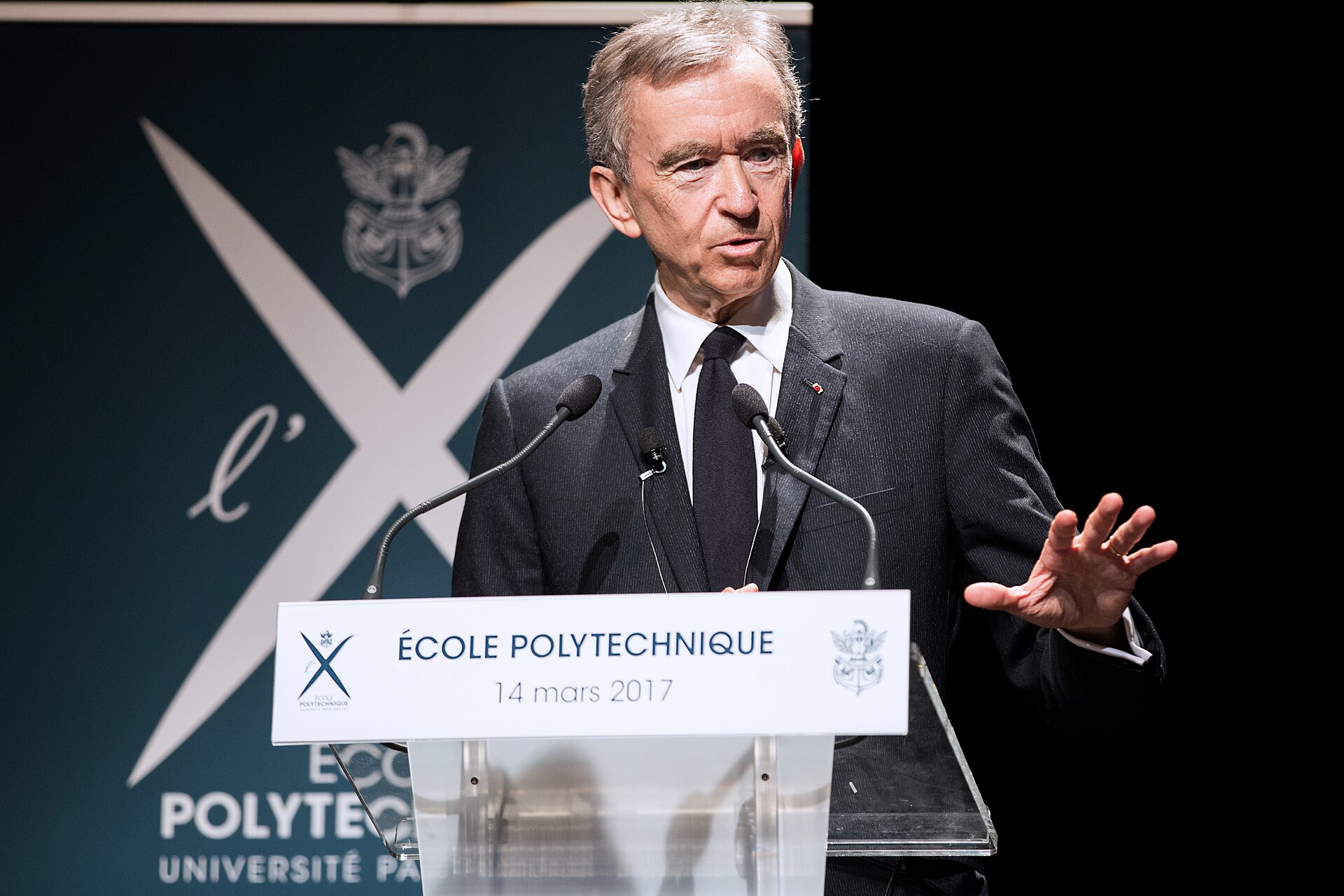
Bernard Arnault was born on 5 March 1949 in Roubaix, France, into an industrial family. He studied at France's École Polytechnique and began his professional career as an engineer at Ferret-Savinel, a construction company.
His early career exposed him to the commercial and operational side of business. He eventually moved into executive management and became chairman of the company in 1978.
However, Arnault's ambitions extended beyond construction. In 1984, he became involved in the restructuring of Financière Agache, a business group associated with Christian Dior. He recognised the potential of prestige brands and made Dior a central part of his strategy.
This decision marked an important turning point. Rather than focusing exclusively on manufacturing, Arnault began concentrating on the value of brands, their reputations and their ability to command customer loyalty.
In 1989, he became the majority shareholder of LVMH Moët Hennessy–Louis Vuitton and took the role of chairman. He has led the group since then.
His early journey demonstrates a lesson that applies to entrepreneurs in almost every industry: professional experience can provide a foundation for entering an entirely different market when combined with research, strategic judgement and a clear understanding of business value.
Arnault's engineering background did not dictate his future. His ability to identify commercial opportunities helped shape it.
Leadership Decision One: Build an Empire Through Strategic Acquisitions
One of Arnault's defining business strategies has been acquiring brands with strong identities and opportunities for long-term development.
Rather than relying on a single product or business, LVMH developed a portfolio spanning fashion and leather goods, wines and spirits, perfumes and cosmetics, watches and jewellery, and selective retailing.
This approach gave the group exposure to multiple segments of the luxury market. It also allowed LVMH to combine the resources of a large organisation with the distinctive identities of individual brands.
Acquisitions are not automatically successful. Buying a business can introduce financial risk, operational complexity and cultural conflict. A company may lose customers if its new owner changes the product, pricing or identity that made it successful.
Arnault's approach has generally emphasised preserving the distinctive character of LVMH's brands while benefiting from the wider group's resources and international scale.
For entrepreneurs, the lesson is that growth does not always require building every capability from scratch. Acquiring an existing business can provide access to customers, expertise, distribution networks or intellectual property that would otherwise take years to develop.
However, a successful acquisition requires more than purchasing a recognisable name. Leaders must understand what gives a business its value and protect those qualities after the transaction.
The central question is not simply whether a company can be acquired. It is whether the new owner can help it become stronger.
Leadership Decision Two: Protect the Value of the Brand
In many industries, businesses compete primarily through price, convenience or technical performance. Luxury companies operate differently because the customer's decision is often influenced by craftsmanship, design, heritage, exclusivity and emotional connection.
Arnault understood that the reputation of a luxury brand could be one of its most valuable assets.
A handbag, watch or fashion item is not purchased solely for its practical function. Customers may also value the story behind it, the quality of its materials, the design philosophy and the identity associated with the brand.
This creates both an opportunity and a responsibility for leadership.
If a brand becomes too widely available, reduces its quality or relies excessively on discounting, it can weaken the perception that distinguishes it from ordinary products. On the other hand, a company that fails to innovate can become irrelevant to new generations of consumers.
LVMH's model seeks to balance heritage with continued investment in products, creative talent, retail environments and marketing.
This approach is especially important when managing multiple brands. Louis Vuitton, Dior, Bulgari and Tiffany & Co. operate in different markets and have distinct histories. They cannot all be managed as though they were interchangeable products.
The leadership lesson is that a strong company identity does not require every product to look or behave the same way. Businesses can share resources and financial discipline while preserving the individual qualities that make their products attractive.
For startups, this principle is equally relevant. A clear brand promise can help a young company stand out in a crowded market. But that promise must be supported by the actual customer experience.
Leadership Decision Three: Think Beyond Short-Term Results
Building a luxury brand takes time. Product design, craftsmanship, customer trust and international recognition cannot always be developed within a single financial quarter.
Arnault's long tenure at LVMH illustrates the value of thinking beyond immediate results. His strategy has involved developing brands, investing in their distribution and positioning them for international customers.
Long-term thinking, however, should not be confused with ignoring financial performance. Businesses must still manage costs, generate revenue and allocate capital carefully.
The challenge is determining which investments will create lasting value and which activities are unlikely to deliver acceptable returns.
For example, expanding into a new country may require significant spending on retail locations, staffing and marketing before a brand becomes established. A leader must assess whether the opportunity justifies the cost and how the company will respond if demand develops more slowly than expected.
This is a useful lesson for founders who feel pressure to pursue rapid growth at any cost.
Expanding a business can create impressive headlines, but growth that weakens profitability or damages the customer experience may not be sustainable.
Arnault's career demonstrates the importance of connecting ambition with disciplined investment. A leader must be willing to commit resources to the future while remaining accountable for the results.
Leadership Decision Four: Turn European Heritage Into a Global Advantage
LVMH's success also illustrates how European businesses can use their cultural and industrial heritage to compete internationally.
Many of the group's brands are associated with French craftsmanship, Italian design, Swiss watchmaking and other traditions of specialised production.
These associations can help create a distinctive customer proposition, particularly in markets where consumers value quality, authenticity and heritage.
Yet heritage alone is not enough. A business must make its products accessible to international customers through distribution, retail operations, communication and a consistent experience.
LVMH developed a global presence while retaining the individual identities of its brands. Its approach shows how a company can expand beyond its home market without removing the qualities that make its products distinctive.
For European entrepreneurs, the lesson is particularly relevant.
A startup does not need to imitate a Silicon Valley company to build an international business. European expertise in engineering, design, manufacturing, fashion, food, sustainability and specialised services can also provide a competitive advantage.
The challenge is to communicate that advantage clearly, develop a reliable route to market and deliver consistent value to customers.
Local origins can be a strength when they are supported by global ambition.
Leadership Decision Five: Understand the Importance of People and Creative Talent
Although Arnault is known for acquisitions and financial strategy, LVMH operates in industries where human creativity is essential.
Luxury products depend on designers, craftspeople, engineers, retail employees, marketing teams and executives who understand their customers. A large financial organisation cannot simply manufacture desirability through its balance sheet.
Leadership therefore requires creating an environment in which different kinds of expertise can contribute.
The group's model allows individual brands to maintain their own identities while benefiting from shared resources and wider organisational capabilities.
This creates a management challenge: leaders must establish common standards without eliminating the independence needed for creativity.
Too little coordination can produce inefficiency. Too much central control can slow decisions and weaken a brand's distinctive character.
Entrepreneurs managing growing teams face a similar problem. A founder may initially make most decisions personally, but that approach becomes difficult as the company expands.
Developing capable managers, defining responsibilities and giving teams room to solve problems can help an organisation grow beyond its founder.
The broader lesson is that leadership is not simply about having the final word. It is about building an organisation where the right people can make effective decisions.
The Challenge of 2026: When a Luxury Giant Faces Slower Growth
Even an established business with powerful brands cannot avoid changing economic conditions.
In October 2026, LVMH faced renewed pressure as weakness in luxury demand, particularly in China, weighed on parts of its business. Reuters reported that the group's fashion and leather-goods division recorded a year-on-year sales decline in the third quarter, while broader luxury-sector valuations had fallen sharply.
These developments illustrate a difficult reality for large businesses: a strategy that performs well during periods of expansion must still be tested when consumers become more cautious.
Luxury companies face several competing pressures. They must protect their brands, respond to changing customer expectations, manage costs and determine whether their pricing remains aligned with the value consumers perceive.
Raising prices can support margins and reinforce exclusivity, but repeated increases may alienate customers who no longer believe the product justifies the cost. Expanding too aggressively can also create pressure if demand weakens.
For Arnault and LVMH, the challenge is not merely to wait for economic conditions to improve. It is to determine how the group can continue delivering products and experiences that customers value while protecting the long-term strength of its brands.
This is an important lesson for entrepreneurs: previous success does not guarantee future growth.
Leaders must monitor customer behaviour, recognise early warning signs and be willing to reassess assumptions when the market changes.
A resilient business is not one that never encounters difficulties. It is one that can respond to them without losing sight of its long-term purpose.
Succession Planning: Can a Business Outlast Its Founder?
Another important question surrounding LVMH is leadership continuity.
Arnault has led the group for decades, and his family has significant involvement in its ownership and management. This makes succession planning an important consideration for the organisation's long-term future.
Founder-led businesses can benefit from a strong central vision, but they can also become overly dependent on one person's judgement, relationships or authority.
As a company grows, leadership must ensure that its strategy, expertise and operating systems can survive changes in management.
Succession planning involves more than identifying a possible replacement. It requires developing capable executives, defining governance structures and making sure that decision-making processes remain effective as responsibilities change.
Family businesses face additional considerations because ownership, professional qualifications and family relationships can overlap.
For entrepreneurs, the lesson is to build a company that does not rely entirely on the founder's daily involvement.
Documenting processes, training future leaders and distributing responsibility can strengthen an organisation and make it more resilient.
A lasting business should be able to preserve its values while adapting to new leadership and new market conditions.
Five Leadership Lessons Entrepreneurs Can Learn From Bernard Arnault
1. Look beyond the obvious opportunity. Arnault recognised that the value of a luxury company could extend far beyond its products. Entrepreneurs should examine the customer loyalty, expertise, distribution and reputation that make a business valuable.
2. Protect what makes a business different. Growth should not destroy the qualities that attract customers. A strong strategy preserves a company's identity while improving its capabilities.
3. Allocate capital with discipline. Every acquisition or expansion requires a clear rationale. Business owners should understand the expected returns, risks and resources needed before committing significant capital.
4. Build teams that combine independence with accountability. Creative people need room to work, but organisations also need clear goals and effective management. Good leadership creates both.
5. Prepare for the next generation of leadership. A company becomes more resilient when its knowledge, values and decision-making capabilities extend beyond its founder.
Conclusion: The Real Meaning of Long-Term Leadership
Bernard Arnault's career demonstrates how strategic acquisitions, brand management, international expansion and disciplined investment can help build a global business.
His leadership of LVMH transformed a collection of luxury businesses into a major international group while keeping the identities of individual brands central to its model.
Yet the company's current challenges also underline an important point: no business strategy is permanently successful. Consumer preferences change, economic conditions shift and established brands must continue earning their customers' trust.
For entrepreneurs, Arnault's story is not a blueprint to copy in every detail. Most startups do not have the resources to acquire prestigious brands or operate across multiple global markets. But the underlying principles remain useful: understand what customers value, protect your competitive advantage, invest for the future and build an organisation capable of adapting.
Ultimately, great leadership is measured not only by the size of a company or the wealth it creates, but by its ability to remain relevant, make sound decisions under pressure and develop the people who will carry the business forward.
That is the enduring lesson behind Bernard Arnault's journey—and one that European entrepreneurs can apply whether they are building a technology startup, a family business or a global brand.

.png)
.png)