
European Bond Market Turmoil Raises Concerns Over Hedge Funds And Government Debt
European Bond Market Turmoil: Hedge Funds Under Scrutiny
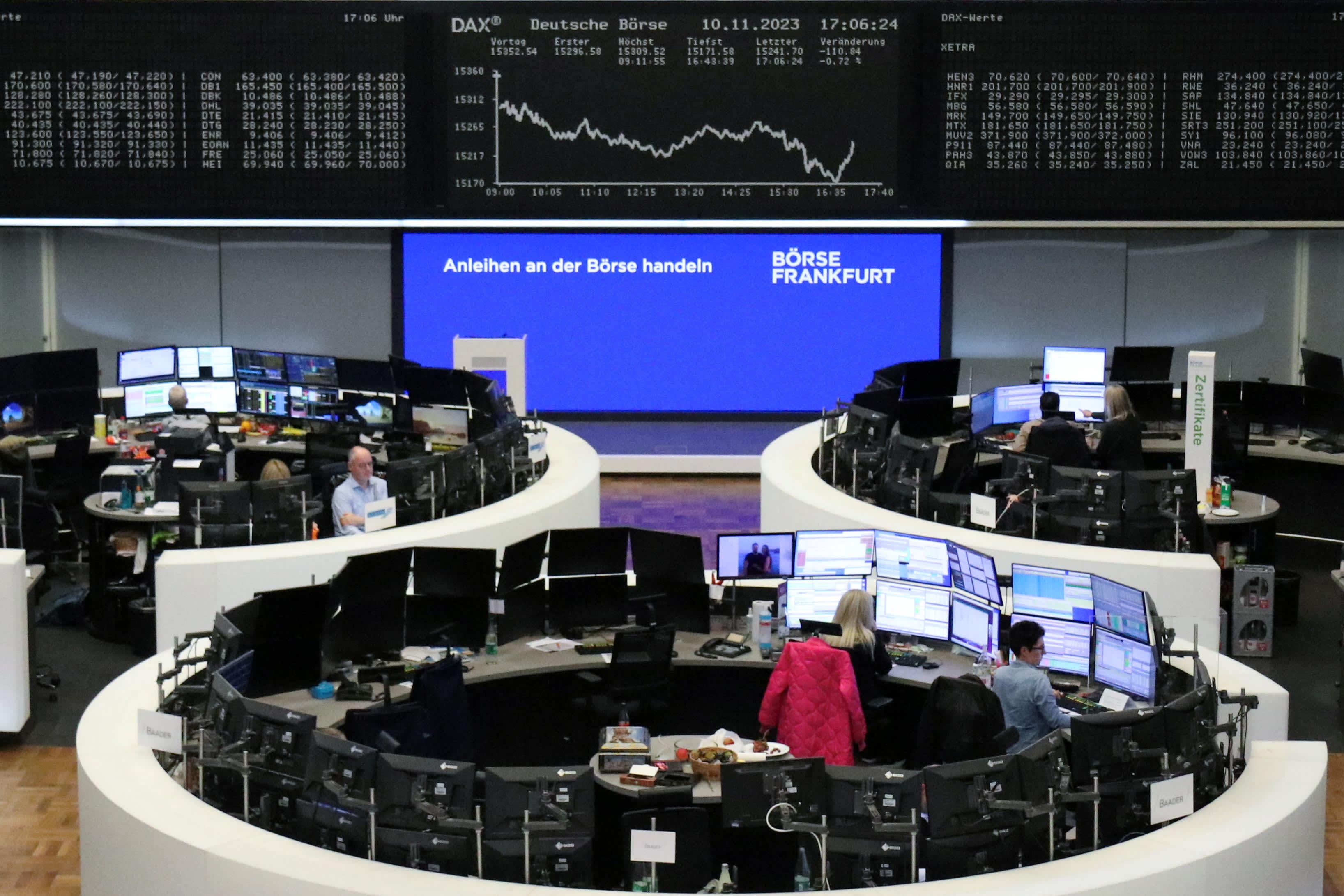
European government bond markets have experienced renewed turbulence in October, drawing attention to the growing influence of hedge funds and the financial risks associated with rising government borrowing costs.
The latest market movements have been particularly pronounced in France, where government bond yields climbed to levels not seen for more than two decades. Investors have been weighing the country's public debt, persistent inflationary pressures, political uncertainty and competition for capital against the backdrop of a broader global bond sell-off.
The speed of the market moves has also raised questions about how hedge funds trade government debt. According to Reuters reporting published on 16 October, hedge funds now account for more than half of trading in the approximately $13 trillion European government bond market, compared with around 30% in 2020. Their activity can help markets function, but leveraged trading and crowded investment positions can also amplify price movements during periods of stress.
The episode matters well beyond financial trading desks. Government bond yields influence the cost at which countries borrow, can affect financing conditions for businesses and households, and provide a benchmark for pricing many other financial assets.
Why Are European Bond Markets Under Pressure?
Several factors are contributing to the recent volatility.
1. Concerns about government debt
Investors are paying closer attention to the fiscal position of European governments, particularly countries that need to borrow heavily while managing substantial budget deficits.
France has become a central focus. Concerns about its deficit, the difficulty of securing political agreement on spending and taxation, and uncertainty ahead of the 2027 presidential election have contributed to investor caution.
When investors believe a government faces greater fiscal risks, they may demand a higher yield to hold its bonds. This additional return compensates them for the perceived uncertainty associated with lending to that government.
A rise in borrowing costs can, in turn, make public finances more difficult to manage. Governments must pay more to refinance maturing debt and fund new borrowing, potentially leaving less room for other priorities.
The International Monetary Fund said on 16 October that France's higher borrowing costs were manageable in the short term, but warned that sustained elevated yields would increase pressure on the government to establish a credible medium-term plan to improve its public finances.
2. Inflation and energy costs
Inflation is another important factor behind the recent bond market moves.
Higher energy prices can raise production, transportation and household costs. They can also make investors less confident that inflation will return to central-bank targets quickly.
If inflation remains persistent, investors may expect interest rates to stay higher for longer. Bonds issued earlier at lower fixed interest rates can then become less attractive relative to new bonds offering higher yields.
The European Central Bank's September 2026 economic assessment highlighted inflationary pressures associated with the conflict in the Middle East. It also noted that long-term government bond yields had risen amid a broader increase in global yields and substantial borrowing needs.
3. Competition for investment capital
Governments are not the only borrowers competing for money. Companies around the world are also raising substantial funding for infrastructure, technology and artificial intelligence-related investment.
When many borrowers seek financing at the same time, investors may demand better returns before committing their capital. This can put upward pressure on yields across bond markets.
These forces interact. A government facing fiscal uncertainty may need to offer higher yields just as investors have more alternatives and are reassessing the risks of holding longer-term debt.
What Is a Government Bond Yield—and Why Does It Matter?
A government bond is a debt instrument through which a government borrows money from investors. In return, the investor typically receives interest payments and repayment of the principal according to the bond's terms.
The bond's yield represents the return implied by its market price and cash flows. Bond prices and yields generally move in opposite directions: when investors sell existing bonds and their prices fall, their yields rise.
This relationship is important because government bond yields influence financing costs across the economy.
For example, higher government yields can contribute to higher borrowing costs for companies issuing bonds. They can also influence the rates financial institutions offer on certain loans, although the relationship is not one-to-one and depends on credit risk, bank funding costs and market conditions.
For governments, the impact is gradual rather than immediate. Existing fixed-rate debt does not usually become more expensive simply because market yields rise. The higher cost is felt as governments issue new debt or refinance maturing obligations.
However, if elevated yields persist over time, the additional interest expense can become significant—particularly for countries with large borrowing requirements.
Hedge Funds: Why Are Regulators Paying Attention?
Hedge funds are investment firms that use a range of strategies to seek returns. Depending on their mandate, they may trade bonds, currencies, derivatives and other financial instruments, sometimes using borrowed money to increase their market exposure.
Their participation in government bond markets has expanded as other traditional buyers have reduced or changed their activity. Central banks have been shrinking some balance sheets, pension systems have evolved, and banks face constraints on the amount of capital they can allocate to certain assets.
Hedge funds can help fill part of this gap by buying and selling bonds, connecting buyers and sellers, and supplying liquidity—the ability to trade without causing large price movements.
But their trading can also create vulnerabilities.
Reuters reported on 16 October that hedge funds account for more than half of trading in European government bonds, based on ECB estimates. The same report described how leveraged positions can be unwound quickly when prices move against investors, potentially intensifying market volatility.
How leveraged trading can amplify market movements
Some hedge funds use strategies designed to profit from relatively small price differences between related financial instruments.
One example is a bond futures basis trade. In simplified terms, a fund may buy a government bond while taking an opposing position in a related futures contract, seeking to earn money from a difference between their prices.
Such strategies can involve borrowing and may generate relatively small returns per trade. Leverage can magnify those returns, but it also increases the risk when prices move unexpectedly.
If a trade loses value, a fund may be required to provide additional collateral. It may then sell assets or reduce its positions to meet its obligations. If many funds hold similar trades, they could attempt to exit at the same time.
That selling can push prices lower, increase yields and prompt further risk reduction. In stressed conditions, a strategy intended to exploit small price differences can therefore contribute to larger market movements.
This is a potential mechanism, not proof that hedge funds alone caused the recent sell-off. Fiscal concerns, inflation and changing global interest-rate expectations remain important underlying factors.
Could Bond Market Turmoil Spread to Other European Countries?
Financial markets are interconnected, so stress in one country's government debt market can influence others.
Investors often compare the yields of different countries' bonds to assess relative risk. German government bonds are widely used as a benchmark in the euro area. If investors become more concerned about France's fiscal outlook, they may demand a larger yield premium to hold French debt rather than German debt.
That difference is commonly called the yield spread.
A widening spread can reflect concerns about a country's fiscal outlook, political uncertainty, market liquidity or the risk investors associate with its debt. It does not automatically mean a government is close to default.
Nevertheless, a sharp repricing in one market can lead investors to reassess other countries with similar fiscal challenges. That can raise borrowing costs across several markets even if the underlying risks differ from country to country.
The extent of any spillover depends on the strength of public finances, economic growth, investor demand and the wider market environment.
What Does This Mean for European Businesses?
The consequences extend beyond governments and investment funds.
Higher financing costs
If market yields remain elevated, companies that rely on bond markets to raise capital may face more expensive financing. Businesses that borrow through banks can also be affected as financial institutions reassess funding costs and lending risks.
The effect varies by business size, credit quality, industry and loan structure. Larger companies with access to capital markets may have more financing options, while smaller firms may depend more heavily on bank lending.
For startups and SMEs, this makes careful cash-flow planning especially important. Businesses should assess how they would manage if refinancing became more expensive or a planned loan took longer to secure.
More cautious investment decisions
When financing costs rise, some projects become less attractive. A company considering a new factory, logistics centre or technology investment may need to reassess whether expected returns justify the additional expense.
This does not mean investment must stop. Projects that improve productivity, reduce costs or meet strong customer demand may still make commercial sense. However, businesses may place greater emphasis on financial resilience and realistic forecasts.
Changes in customer demand
Higher borrowing costs can also affect households. If mortgage payments and other credit expenses increase, some consumers may have less money available for discretionary purchases.
Retail, hospitality, property and other consumer-facing sectors may therefore be exposed to changes in spending. The actual impact depends on local economic conditions and how financing costs evolve.
What Should Investors Watch Next?
Investors and financial professionals will be watching several indicators to assess whether the turbulence is easing or becoming more persistent.
Government borrowing plans: Investors will examine budget proposals, deficit targets and debt issuance. Credible fiscal plans can help reduce uncertainty, although market confidence also depends on whether policies are implemented.
Bond yields and spreads: Changes in the yields of French, German and other European government bonds can show how investors are reassessing relative risk. A single day's move should not be treated as a complete picture of market conditions.
Market liquidity: Liquidity measures how easily investors can buy or sell securities without significantly affecting their prices. Poor liquidity can magnify price movements during periods of stress.
Leverage and collateral requirements: Regulators will be interested in how much borrowing financial firms use, whether trades are concentrated in similar strategies and how investors might respond to sudden losses or margin calls.
Inflation and central-bank decisions: Inflation data and ECB communications will influence expectations for future interest rates, which in turn affect bond valuations.
The ECB's May 2026 Financial Stability Review warned that leverage and liquidity vulnerabilities among some non-bank financial institutions, including global hedge funds, could amplify price swings in European sovereign bond markets. It called for stronger monitoring, improved data and more effective policy tools to address risks from non-bank financial activity.
Could the Market Turmoil Create Opportunities?
Market volatility can create opportunities as well as risks.
When bond prices fall, yields rise, potentially making some securities more attractive to investors who believe the market has overestimated the underlying risk. Some long-term investors may see opportunities to buy bonds at lower prices.
However, a higher yield is not automatically a bargain. Investors need to consider the government's fiscal outlook, the possibility of further price declines, the duration of the bond, inflation and the liquidity available in the market.
For businesses, volatile bond markets are a reminder to avoid relying on a single financing scenario. Reviewing debt maturities, maintaining adequate liquidity and considering different interest-rate outcomes can help reduce exposure to unexpected changes.
Conclusion: Europe Faces a Test of Market Confidence
The October sell-off has highlighted the pressures facing European government bond markets as governments manage debt, investors respond to inflation and financial institutions compete for capital.
Hedge funds are an important part of the modern bond market. They can provide liquidity and support trading, but leveraged positions and crowded strategies may also intensify volatility when market conditions deteriorate.
The key question is not whether hedge funds are solely responsible for the turmoil—they are not—but whether the financial system can manage the risks created by leverage, rapid trading and interconnected markets.
For European governments, credible fiscal planning remains central to investor confidence. For businesses, the priority is to prepare for changing financing conditions. For regulators, the challenge is to preserve the benefits of market participation while ensuring that risks do not build up unnoticed.
The coming weeks will show whether recent volatility settles or becomes a more persistent feature of Europe's financial landscape.
Disclaimer: This article is for news and informational purposes only. It does not constitute financial or investment advice.