
Jensen Huang: The Leadership Vision That Turned Nvidia Into An Ai Powerhouse
Jensen Huang Leadership: How He Built NVIDIA Into an AI Powerhouse
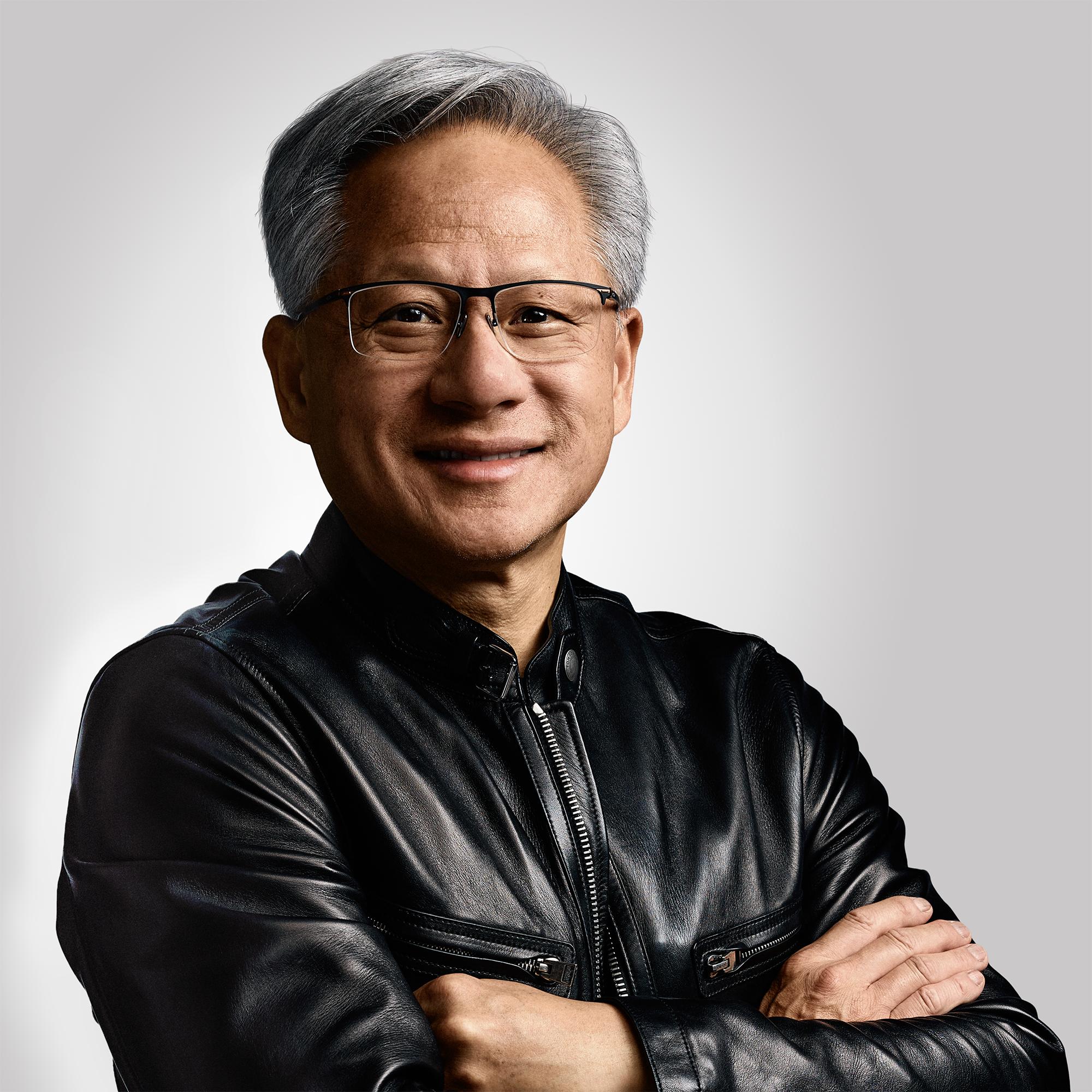
Some business leaders succeed by improving an established business model. Others recognise an opportunity before the wider market understands its potential. Jensen Huang, co-founder and CEO of NVIDIA, belongs to the second category.
When Huang co-founded NVIDIA in 1993, the company focused on graphics technology for computers. Today, NVIDIA plays a central role in the computing infrastructure used to develop and operate artificial intelligence systems. Its technology supports applications ranging from scientific research and robotics to autonomous machines, healthcare and enterprise software.
This transformation did not happen overnight. It required years of investment in engineering, software, partnerships and computing architectures that eventually became essential to modern AI development.
NVIDIA reported revenue of $215.9 billion for its fiscal year 2026, a 65% increase from the previous year. In August 2026, the company reported quarterly revenue of $96.2 billion for the second quarter of fiscal 2027, demonstrating the continuing scale of demand for its computing platforms.
These results reflect the work of thousands of employees, customers and partners, rather than the decisions of one executive alone. However, Huang's leadership provides an important case study in strategic patience, innovation and organisational execution.
For entrepreneurs, his journey raises a fundamental question: how can a business prepare for a future market before that market becomes commercially obvious?
1. Thinking Beyond the Immediate Market
One of the defining characteristics of Huang's leadership is his willingness to look beyond NVIDIA's original market.
The company initially became known for graphics processing units, or GPUs, which perform the complex calculations required to generate images and support computer games. But Huang and his team recognised that the technology's ability to perform many calculations in parallel could have applications beyond graphics.
This insight helped NVIDIA expand into high-performance computing and accelerated computing, eventually creating a foundation for its role in artificial intelligence.
The significance of this decision lies in the difference between improving a product and rethinking its potential.
A business focused exclusively on its current customers may overlook opportunities emerging in adjacent markets. A company that understands its underlying technical capabilities can sometimes discover entirely new applications for them.
For Huang, the opportunity was not simply to sell better graphics cards. It was to develop computing technology that could solve increasingly complex problems.
Entrepreneurs can apply this principle by regularly evaluating what their products and capabilities could accomplish beyond their original purpose. Customer needs evolve, industries converge and new applications emerge. Leaders who remain curious about these changes may discover opportunities that competitors overlook.
2. Investing Before the Opportunity Becomes Obvious
Building a new market often requires substantial investment before demand becomes predictable.
NVIDIA's development of CUDA, its parallel computing platform and programming model, illustrates this challenge. Introduced in 2006, CUDA enabled developers to use NVIDIA GPUs for a much wider range of computational tasks.
At the time, the broader AI industry had not yet reached the scale it would achieve during the 2020s. Developing software tools and attracting developers therefore required a long-term commitment.
The strategic value of CUDA grew as researchers and engineers used GPUs for machine learning, scientific computing and other demanding workloads. Over time, the surrounding software ecosystem became an important part of NVIDIA's competitive position.
This is a significant leadership lesson: a company can create value by investing not only in its products but also in the ecosystem that makes those products useful.
For startups, this could mean developing APIs, documentation, educational resources or integrations that help customers adopt a product. These investments may not produce immediate revenue, but they can strengthen customer relationships and make the business more difficult to replace.
The key is disciplined patience. Long-term investments still require clear objectives, technical progress and regular reassessment. Vision is valuable, but it must be supported by execution.
3. Building an Ecosystem Instead of Selling a Single Product
NVIDIA's position in AI is not based solely on individual chips. Its offering increasingly combines processors, networking technology, systems, software and development tools.
This integrated approach addresses a practical problem: training and operating advanced AI models requires more than a powerful processor. It also requires memory, communication between computing units, software optimisation, energy management and reliable infrastructure.
By developing interconnected components, NVIDIA can offer customers a more complete computing platform.
This strategy creates value in two ways. First, customers can deploy complex computing systems with components designed to work together. Second, developers and businesses that have built workflows around NVIDIA's software and hardware may find it more convenient to continue using the ecosystem.
For entrepreneurs, the lesson is to consider the wider customer journey rather than concentrating exclusively on a single transaction.
A software company, for example, might improve its position by offering integrations, customer support, training and complementary services. A manufacturer might create additional value through maintenance, replacement parts and connected products.
The goal is not to add unnecessary complexity. It is to understand which complementary capabilities make the core product more useful and valuable.
4. Maintaining an Engineering-Led Culture
NVIDIA operates in an industry where technological advantages can disappear quickly. Competitors continually develop new processors, architectures and software, while customer requirements change as AI models become more sophisticated.
In this environment, a strong engineering culture is essential.
Huang's background in electrical engineering and his long involvement in NVIDIA's technical direction have helped establish an identity centred on computing innovation. The company has consistently invested in research and development, bringing together specialists in chip design, software, networking and systems engineering.
An engineering-led culture does not mean that commercial considerations are unimportant. Rather, it means that technical understanding informs strategic decisions.
Leaders need to recognise which problems matter most, where performance improvements create customer value and which technologies could influence the company's future.
For entrepreneurs, this principle applies even outside technology. Businesses benefit when leaders understand the fundamental drivers of their products and industries rather than relying exclusively on financial indicators.
They do not need to be the most knowledgeable specialists in every department. They do need to ask informed questions, encourage technical expertise and create an environment where difficult problems can be discussed openly.
5. Making Decisions for the Long Term
NVIDIA's transformation demonstrates how strategic decisions can take years to deliver their full commercial impact.
The company's investments in GPUs, CUDA and accelerated computing developed over a long period. Their importance increased as AI research advanced and organisations began deploying AI systems at a larger scale.
This timeline illustrates why leadership requires a balance between immediate performance and future positioning.
Businesses must generate revenue, manage costs and meet customer commitments today. At the same time, they need to develop products and capabilities that will remain relevant tomorrow.
Focusing exclusively on quarterly performance can discourage investment in projects whose benefits take years to materialise. Conversely, pursuing an ambitious future without financial discipline can expose a business to serious risks.
Huang's leadership provides a case study in the value of sustained investment when it is connected to a clear technological direction.
Entrepreneurs can use a similar approach by separating short-term operating priorities from longer-term strategic investments. They should establish measurable milestones, monitor progress and remain prepared to adjust when assumptions change.
Long-term thinking does not mean refusing to change direction. It means making decisions with an understanding of their future consequences.
6. Recognising the Importance of Timing
A promising technology does not automatically become a successful business. Commercial success depends on whether customers need it, whether it can be delivered reliably and whether the surrounding market is ready to adopt it.
NVIDIA's expansion into accelerated computing placed the company in a strong position as AI workloads grew more demanding.
The wider industry has also changed. Generative AI systems, large language models and AI agents require substantial computing resources. Companies and governments are investing in data centres and specialised infrastructure to support these applications.
NVIDIA's recent financial performance reflects this demand, although future growth will depend on many factors, including competition, customer investment plans, energy availability and the economics of deploying AI at scale.
This is where strategic timing becomes important.
Entering a market too early can create years of expense before customers are ready. Entering too late can mean competing against businesses that have already developed strong products and relationships.
Entrepreneurs should therefore distinguish between a technology that is interesting and a market that is ready to pay for it. Customer research, pilot projects and evidence of willingness to pay can help validate an opportunity before a business commits excessive resources.
7. Turning Organisational Speed Into a Competitive Advantage
In fast-moving technology markets, the ability to make decisions and execute them effectively can be as important as the quality of the original idea.
NVIDIA must coordinate complex work across hardware design, software development, manufacturing partners and customers. Product launches depend on teams working together while managing technical constraints and shifting market requirements.
Huang has become associated with an intense, demanding leadership style. That approach can create urgency, but it also raises questions about sustainable workloads, communication and employee wellbeing.
The broader lesson for business leaders is not that every organisation should imitate the same management style. Different teams and industries require different approaches.
Instead, leaders should identify where speed matters, remove unnecessary barriers and establish clear accountability. They should also ensure that urgency does not become a substitute for thoughtful planning or healthy working practices.
A company that moves quickly but repeatedly makes avoidable mistakes may waste resources. A company that requires excessive approval for every decision may miss opportunities.
Effective leadership creates a balance between decisive action, technical rigour and the capacity of employees to perform consistently over time.
8. Understanding the Risks That Come With Success
NVIDIA's position in the AI industry creates significant opportunities, but it also brings risks.
The company operates in a highly competitive market where technology evolves rapidly. Customers may develop alternative solutions, competitors may improve their products, and advances in AI could change the amount or type of computing required.
There are also wider infrastructure challenges. Large AI data centres require substantial electricity, advanced manufacturing capacity and complex supply chains. Financial returns on AI investment will influence how quickly customers continue expanding their computing infrastructure.
These uncertainties mean that current demand should not be treated as a guarantee of unlimited future growth.
For Huang and NVIDIA, continued success depends on maintaining technological leadership while responding to changing customer requirements and market conditions.
This offers an important lesson for entrepreneurs: success can create its own strategic blind spots.
A business that performs well may become overly confident in its existing products, underestimate emerging competitors or commit too much capital to a single market assumption.
Strong leaders monitor risks even when results are positive. They invest in innovation, maintain financial discipline and prepare for scenarios in which market conditions change.
9. What Entrepreneurs Can Learn From Jensen Huang
Huang's leadership journey offers several practical lessons for business owners and executives.
Think beyond your original product. Understand the capabilities your business possesses and explore how they could solve new problems.
Invest in the future before demand peaks. Develop important technologies, capabilities and partnerships early, while maintaining financial discipline.
Build an ecosystem around your offering. Complementary products, software and services can make the customer experience more valuable.
Understand the fundamentals of your industry. Leaders who engage with technical and operational realities can make better strategic decisions.
Balance long-term vision with measurable execution. Ambitious goals require milestones, accountability and evidence of progress.
Prepare for uncertainty. Strong current performance should encourage continued innovation rather than complacency.
These lessons do not require a startup to have NVIDIA's resources. Even a small business can invest in customer relationships, improve its technical knowledge and build a strategy that extends beyond immediate sales.
Conclusion: Leadership Is About Preparing for What Comes Next
Jensen Huang's journey at NVIDIA demonstrates how a company can evolve from a specialised graphics business into a central provider of computing infrastructure for the AI era.
The transformation was built over decades through engineering, software development, ecosystem investment and strategic decisions whose full value became apparent over time.
NVIDIA's financial performance in 2026 illustrates the extraordinary demand currently surrounding AI computing. Yet the next chapter will require the company to navigate competition, infrastructure constraints and changing expectations about the economic value of AI.
For entrepreneurs, Huang's most important lesson is not simply to predict the next major technology trend. It is to build an organisation capable of learning, investing and adapting before change becomes unavoidable.
Great leadership combines ambition with discipline. It recognises opportunities early, develops the capabilities needed to pursue them and remains alert to the risks that accompany growth.
In a world where industries can change rapidly, the strongest leaders are those who prepare their businesses not just to succeed today, but to remain relevant tomorrow.



.png)
.png)