
Stéphane Boujnah: The Leadership Strategy That Is Reshaping Europe’s Financial Markets
Stéphane Boujnah Leadership: How He Transformed Euronext
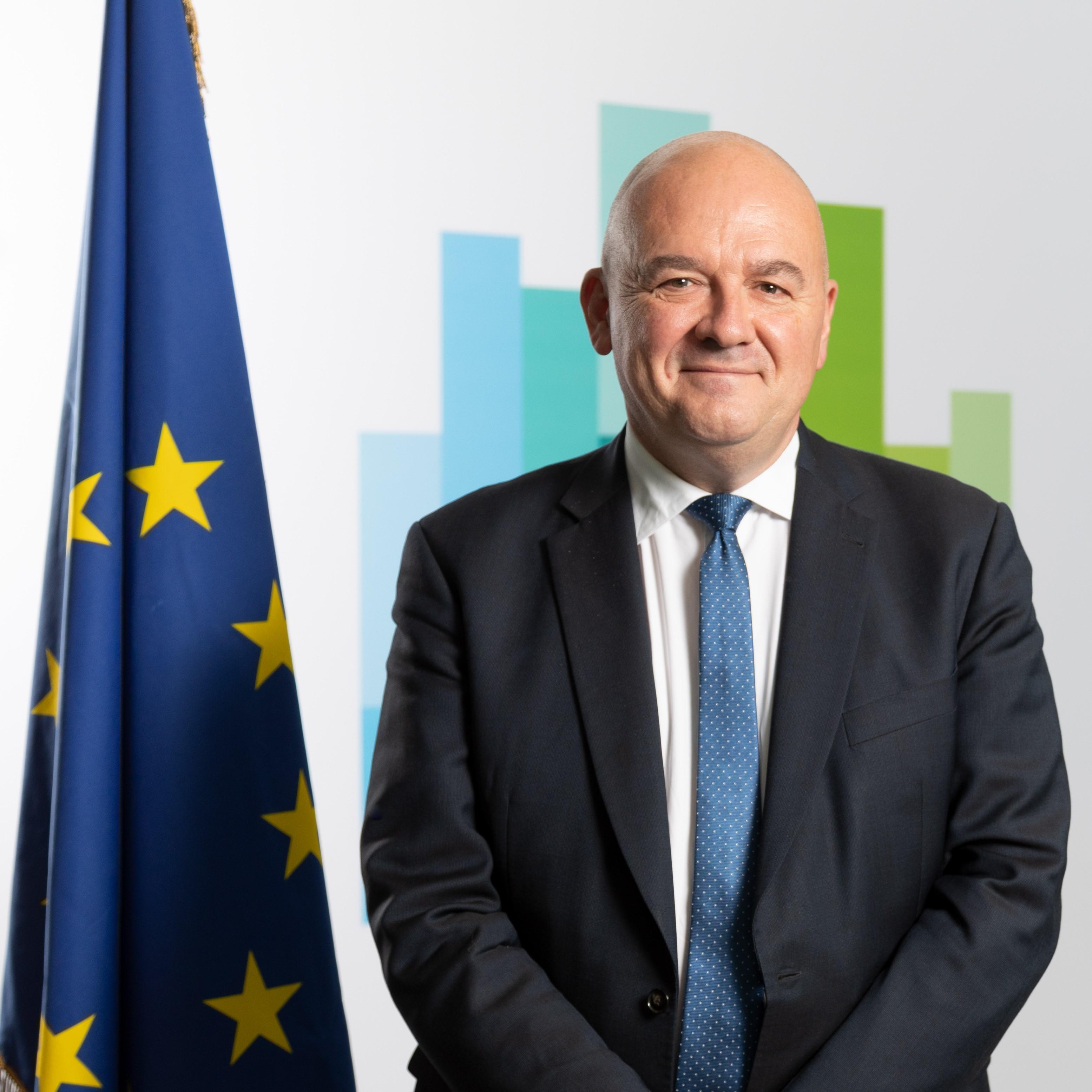
Leadership in the financial industry requires more than understanding markets. It demands the ability to anticipate economic changes, make strategic investments, manage risk and build organisations that remain competitive over decades.
French business executive Stéphane Boujnah offers an interesting example of this approach. Since becoming chief executive officer and chairman of the managing board of Euronext in November 2015, he has overseen the company's transformation from a relatively smaller exchange operator into a broader European financial-market infrastructure group.
Rather than focusing exclusively on stock trading, Boujnah has pursued a strategy that connects multiple parts of the financial system, including listings, trading, clearing, settlement, market data and technology. His leadership reflects a wider ambition: creating a more integrated European capital market capable of supporting businesses, investors and economic growth.
The results demonstrate the scale of this transformation. According to Euronext's 2025 annual report, the company generated underlying revenue and income of €1.823 billion in 2025, an increase of 12.1% year over year. Its adjusted EBITDA reached €1.143 billion, up 13.6%. These figures illustrate the commercial progress of the organisation under its broader expansion strategy.
Source: Euronext 2025 Annual Report.
1. From Financial Expertise to Corporate Leadership
Before leading Euronext, Boujnah developed experience across investment banking, mergers and acquisitions, financial advisory services and international business development.
His career included senior roles at Deutsche Bank and Santander, where he worked on financial markets and banking activities across European markets. He also founded KM5 Capital, an advisory business specialising in fundraising and mergers and acquisitions for venture capital funds and innovative technology companies.
This experience provided a foundation for understanding how businesses raise capital, how financial institutions operate and how acquisitions can reshape competitive industries.
When Boujnah joined Euronext in 2015, he inherited an organisation with an important position in European financial markets but considerable room for expansion. His response was to pursue a broader strategic ambition rather than treat the existing business model as fixed.
One lesson for aspiring leaders is that professional expertise becomes especially valuable when it is translated into a clear organisational direction. Knowing how an industry operates is important; recognising how its structure could evolve is what creates opportunities for transformation.
2. Strategic Acquisitions as a Growth Engine
One of the defining features of Boujnah's leadership has been his use of acquisitions to expand Euronext's geographic reach and capabilities.
Over the years, Euronext has brought several exchanges and financial-market businesses into its wider group. Major transactions included the acquisition of the Irish Stock Exchange in 2018, Oslo Børs in 2019 and Borsa Italiana in 2021.
These acquisitions helped Euronext expand its presence across Europe and strengthen its role in the financial-market ecosystem. Instead of building every capability independently, the company could combine existing institutions, expertise, technology and customer relationships.
However, acquisitions do not automatically produce success. Companies must integrate operations, align cultures, manage costs and demonstrate that the combined organisation offers greater value than its individual parts.
Boujnah's approach highlights an important leadership principle: growth should be supported by a strategic rationale, not simply by the desire to become larger.
For entrepreneurs, this lesson applies even when large acquisitions are financially unrealistic. A smaller company can pursue the same principle through partnerships, selective hiring, complementary products or entering a new market where it already has a competitive advantage.
3. Thinking Beyond Individual National Markets
Europe has a large economy, but its financial markets have historically been divided across national boundaries, regulatory structures and local institutions.
Boujnah has argued for a more integrated European capital market. Euronext's business model reflects this ambition by connecting exchanges and financial services across countries while retaining important local market identities.
The company's expansion into markets such as Ireland, Norway and Italy helped create a wider network of financial-market services. In November 2025, Euronext also completed its voluntary share-exchange offer for the Athens Exchange Group. By the end of that year, it held 75.62% of the group's voting rights, according to its annual report.
The transaction extended Euronext's reach into Greece and offered the possibility of connecting the local market with its wider trading and post-trade infrastructure.
This strategy demonstrates how leaders can balance two objectives: preserving local strengths while creating advantages through a larger network.
For entrepreneurs, the equivalent might be expanding internationally without losing the local customer knowledge that made the original business successful. The objective is not to eliminate every difference between markets, but to identify where shared infrastructure, expertise or distribution can create value.
4. Financial Discipline Behind Ambitious Expansion
An aggressive expansion strategy can become dangerous if a company pays too much for acquisitions or allows operating costs to rise faster than revenue.
Boujnah's leadership has placed importance on capital allocation, cost discipline and operational performance alongside growth.
Euronext's 2025 results provide a useful example. Underlying revenue and income rose 12.1% to €1.823 billion, while adjusted EBITDA increased 13.6% to €1.143 billion. The adjusted EBITDA margin reached 62.7%.
These figures suggest that the company increased revenue while also improving its adjusted operating profitability. They do not, by themselves, prove that every strategic decision was successful, but they illustrate why financial discipline matters when an organisation is expanding.
The broader lesson is that revenue growth alone is an incomplete measure of leadership performance. Business leaders must also examine profitability, cash generation, debt, investment requirements and the long-term value of their decisions.
For startups, this is particularly important. Rapid customer acquisition can look impressive, but a business that spends without understanding its unit economics may struggle to survive. Sustainable growth requires a clear connection between investment and measurable results.
5. Innovation Beyond the Traditional Stock Exchange
Financial markets are changing as technology reshapes how investors access information, how transactions are processed and how financial institutions serve clients.
Euronext's strategy, known as Innovate for Growth 2027, reflects an effort to expand beyond traditional exchange activities. The plan includes developing non-volume-related businesses, strengthening securities services and improving the company's integrated market infrastructure.
Euronext has also expanded its technology and data activities. These services can create more diversified sources of income than businesses that depend heavily on the volume of market transactions.
In 2025, non-volume-related revenue and income represented 59% of Euronext's total underlying revenue and income. This diversification can help the company reduce its dependence on a single source of commercial activity.
The leadership principle is straightforward: companies must prepare for the future of their industries rather than depend entirely on their historical strengths.
A retailer might develop e-commerce and customer analytics. A manufacturing company might invest in connected equipment and predictive maintenance. A professional-services business might introduce software that improves delivery and customer experience.
In each case, innovation is most effective when it strengthens the core business while creating opportunities for future growth.
6. Building One Organisation Across Different Markets
Bringing multiple businesses together presents a challenge that is often underestimated: organisational integration.
Acquired companies may have different operating practices, technology platforms, customer expectations and corporate cultures. If these differences are not managed carefully, the expected benefits of an acquisition can be delayed or lost.
Euronext's expansion has required it to develop a more connected operating model across several European markets while maintaining reliable financial-market services.
In this environment, leadership must combine a clear strategic direction with effective execution. Employees need to understand how their work contributes to the wider organisation, and management must ensure that integration does not weaken customer service or operational resilience.
The financial industry also places particular importance on cybersecurity and continuity. Trading and settlement infrastructure must be dependable because disruptions can affect market participants well beyond the organisation directly responsible.
This creates a valuable lesson for business leaders: growth is not complete when a transaction closes or a new office opens. The real work is ensuring that the enlarged organisation operates effectively and delivers the promised value.
7. A Leadership Vision for European Competitiveness
Boujnah's strategy also connects corporate growth with a broader question about Europe's economic future.
Businesses need access to financing to develop new products, expand internationally, invest in research and create employment. Deep and accessible capital markets can help connect companies seeking funding with investors willing to provide it.
A more integrated European financial system could make it easier for businesses to reach investors across borders and help strengthen the region's financial infrastructure.
However, achieving this objective requires more than the efforts of one exchange operator. Regulatory coordination, investor confidence, economic conditions and decisions by national governments and European institutions all influence the outcome.
This distinction is important when assessing leadership. A CEO can shape a company's capabilities and strategy, but cannot independently resolve every structural challenge affecting an entire continent.
Boujnah's approach illustrates how a business leader can pursue commercial objectives while contributing to a wider economic ambition.
8. What Entrepreneurs Can Learn From Stéphane Boujnah
Boujnah's career offers several practical lessons for founders, executives and aspiring business leaders.
Think beyond your current business model. Established companies can lose relevance when they assume that today's revenue sources will remain sufficient forever. Explore adjacent services and emerging customer needs before change becomes unavoidable.
Expand with a clear purpose. Acquisitions and international expansion should strengthen capabilities, open valuable markets or improve customer offerings. Growth without strategic logic can create complexity rather than competitive advantage.
Protect financial discipline. Ambitious plans require realistic budgets, measurable milestones and a clear understanding of risk. Profitability and cash generation matter alongside market share.
Build systems, not just scale. An expanding company needs processes, technology, talent and governance that can support a larger organisation. Without these foundations, growth can undermine performance.
Understand the wider environment. Successful leaders consider how regulation, technology, competition and economic conditions affect their businesses. Strategic decisions are stronger when they account for forces beyond the company's immediate operations.
These lessons are relevant to businesses of different sizes. A founder building a small technology startup may not be able to acquire competitors or operate across several countries, but the principles of disciplined expansion, strategic positioning and operational excellence remain applicable.
Conclusion: Leadership Through Long-Term Transformation
Stéphane Boujnah's tenure at Euronext illustrates how strategic leadership can reshape an organisation's position within a complex industry.
Through acquisitions, diversification, financial discipline and investment in broader market infrastructure, Euronext has expanded its European footprint and strengthened its range of services. Its 2025 financial results provide evidence of continued growth, while its Innovate for Growth 2027 strategy sets out further ambitions.
The wider lesson is that effective leadership is not simply about making bold announcements or pursuing rapid expansion. It involves identifying a long-term opportunity, committing resources to a coherent strategy and building the operational capabilities needed to execute it.
For entrepreneurs, the message is clear: sustainable success comes from combining ambition with discipline. Leaders who understand both where their industries are heading and what their organisations must do to compete will be better positioned to create lasting value.


.png)
.png)