German Startup Ubitium Raises $14 Million To Build A Universal Processor For The Next Generation Of Intelligent Machines
German Startup Ubitium Raises $14 Million for Physical AI Chip
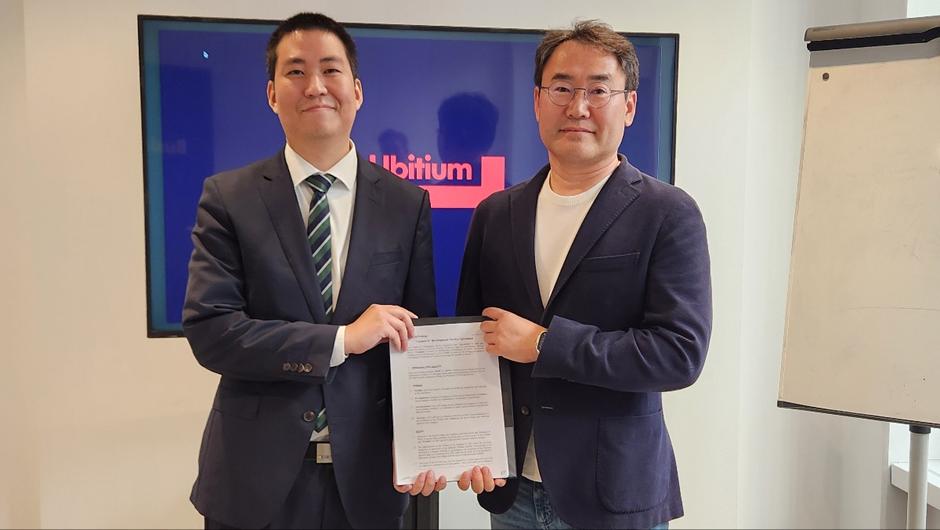
Europe’s startup ecosystem is attracting fresh investment in advanced semiconductor technology as German deep-tech company Ubitium raises $14 million in seed funding to develop a new generation of processors for intelligent machines.
Announced on 13 October 2026, the funding round brings the company’s total seed funding to $18 million since its founding in 2024. The investment was led by Ibex Investors, with participation from OpenOcean, existing investors KBC Focus Fund, Runa Capital and Inflection, alongside Florian Seibel, co-founder and co-CEO of European defence technology company Quantum Systems, who invested personally.
Ubitium is developing what it describes as a universal processor for physical artificial intelligence, or physical AI. Rather than relying on several separate specialised chips to handle sensing, artificial intelligence and machine control, the startup wants to combine these tasks within one reconfigurable processor architecture.
The company believes this approach could simplify the design of intelligent machines, reduce unnecessary data transfers between processors and make advanced computing more accessible to manufacturers.
Its technology could eventually be relevant to robotics, drones, industrial automation, autonomous systems and other machines that must perceive their surroundings, make decisions and respond in real time.
The latest funding gives Ubitium additional resources to turn its early hardware demonstrations into commercial products. It also places the German startup among Europe's emerging semiconductor companies working to address the computing challenges created by AI moving from software applications into the physical world.
What Is Ubitium, and Why Is It Attracting Investors?
Founded in 2024, Ubitium is headquartered in Düsseldorf, Germany. The company was established by Hyun Shin Cho and Martin Vorbach, who bring experience in computing architecture and reconfigurable processor technology.
The startup is built around a straightforward observation: intelligent machines increasingly need to perform several computing tasks simultaneously.
A robot, for example, must interpret information from cameras and sensors, run algorithms to understand its environment, make decisions and send precise commands to its motors. These tasks have different computing requirements and often operate under strict limits on power consumption, physical space and response time.
Traditional embedded systems frequently distribute these responsibilities across different processors. A digital signal processor may handle sensor data, a neural processing unit may run AI models, and a central processing unit may manage general computing and control.
This arrangement can work well, but integrating multiple chips adds engineering complexity. Data must move between components, software must coordinate their operations, and the system must manage power, timing and communication.
Ubitium wants to reduce this complexity with a processor architecture that can allocate computing resources dynamically across different tasks.
The company's approach is particularly relevant as AI moves beyond computers and smartphones into machines that interact with the physical world.
For investors, the opportunity lies in developing a hardware platform that manufacturers could potentially use across multiple products instead of designing a different collection of specialised chips for every application.
However, Ubitium is still an early-stage company. Its long-term commercial success will depend on demonstrating competitive performance, securing customers and delivering products that manufacturers can integrate reliably into their systems.
What Is Physical AI?
Physical AI refers to artificial intelligence that operates within machines capable of sensing, interpreting and acting on the real world.
Unlike a chatbot that generates text or an image model that creates pictures, a physical AI system must interact with its environment. It may need to detect an obstacle, understand its position, choose an action and execute that action within a strict time limit.
Consider an autonomous warehouse robot.
The robot uses sensors to detect shelves, workers and other vehicles. Its computing system interprets the information, calculates a route and controls its movement. If a person suddenly enters its path, the robot must respond quickly enough to avoid a collision.
A drone faces similar challenges. It must process information from sensors, maintain stable flight, navigate its environment and react to changing conditions, potentially while operating on battery power and with limited connectivity.
Industrial robots, autonomous inspection systems and intelligent vehicles also depend on the ability to process information and control physical actions reliably.
This creates different hardware requirements from those of many cloud-based AI applications. Physical AI systems often need low latency, predictable response times, efficient power consumption and the ability to operate directly on the device.
Ubitium's universal processor is designed around these requirements. Its goal is to bring sensing-related processing, AI inference and real-time control together within one programmable architecture.
The company is betting that a more unified computing platform could make it easier for manufacturers to develop the next generation of intelligent machines.
How Ubitium’s Universal Processor Works
Ubitium's architecture uses a reconfigurable array of programmable processing elements. These elements can be assigned different computing responsibilities depending on the workload.
The company describes the approach as a way to combine signal processing, AI inference and real-time control on the same processor.
The distinction is important. Many AI chips are optimised primarily for executing machine-learning workloads. While this is valuable for applications such as image recognition, AI inference is only one part of operating an autonomous machine.
The machine must also collect and process sensor information and translate its decisions into physical actions. These responsibilities have to work together within the same system.
Ubitium's architecture aims to allocate its computing resources across these different tasks as requirements change.
The company also highlights unified memory and compatibility with standard RISC-V development tools. RISC-V is an open instruction-set architecture used by a growing ecosystem of processor designers and developers.
By building around a common processor architecture and software toolchain, Ubitium aims to reduce the complexity of developing and maintaining software for intelligent machines.
If the approach works as intended, manufacturers could benefit from fewer separate processing components, reduced communication overhead and a more consistent development environment.
However, integrating several computing functions into one chip does not automatically make every task faster or more energy-efficient. The outcome will depend on the architecture, the application, the software and the performance requirements of the device.
The company will need to demonstrate those advantages through commercial products and real-world deployments.
Ubitium Has Already Demonstrated Its First Silicon
One important development behind the new funding round is that Ubitium has moved beyond a purely theoretical design.
According to the company, its first chip, called the UB108, contains 256 processing elements and was manufactured using Samsung's 8-nanometre semiconductor process.
Ubitium says the chip has demonstrated signal processing, AI inference and real-time control running on the same reconfigurable array.
This represents a meaningful milestone for an early-stage semiconductor startup. Designing a processor architecture is one challenge; successfully producing physical silicon and demonstrating that it can execute the intended workloads is another.
The company's first silicon provides an initial basis for further development. Nevertheless, an early hardware demonstration is not the same as a finished commercial processor operating at scale.
The next step is to turn the technology into a product that customers can evaluate and eventually integrate into their own systems.
Ubitium plans to tape out its first commercial processor, the UB410, which is designed to contain 4,096 processing elements. The company has said it intends to deliver evaluation units in 2027.
These are future milestones, not completed achievements. The commercial processor will need to demonstrate performance, reliability, software compatibility and power efficiency that meet the requirements of its target customers.
Even so, having working initial silicon gives the startup a concrete platform from which to continue its development.
Where Could Ubitium’s Technology Be Used?
Ubitium is targeting applications in which machines need to process sensor information, run AI and control physical operations.
Robotics and industrial automation
Industrial robots increasingly work alongside sophisticated vision systems and intelligent software. A unified processor could potentially simplify the electronics required for perception, decision-making and control.
For manufacturers, reducing the number of separate components could make system integration easier. But actual benefits would need to be assessed against established industrial processors and alternative architectures.
Drones and autonomous systems
Drones must often perform demanding computations while operating under strict weight and battery constraints. They may need to interpret camera or radar data, estimate their position and respond to changing conditions.
Ubitium sees autonomous systems, including drones, as a potential application for its broader perceive-think-act computing model.
The ability to process information onboard can also be valuable when communication links are unreliable or unavailable.
Radar and audio processing
The company says its initial customers are developing radar and audio systems that combine demanding signal-processing workloads with AI.
These applications could provide an entry point into commercial markets before the startup's technology is deployed across more complex autonomous systems.
Radar and audio systems must often process large amounts of information quickly. Combining signal processing and AI within one architecture may offer advantages if it meets the necessary performance and reliability requirements.
Smart machines and connected equipment
Over time, a successful universal processor could potentially serve other intelligent devices, including inspection equipment, specialised vehicles and connected industrial machinery.
However, each market has different certification, reliability, cost and performance requirements. Ubitium will need to establish where its architecture provides the clearest commercial advantage.
How the $14 Million Funding Will Help the Startup
Building semiconductor products requires substantial investment. Even when a company has demonstrated its first silicon, it must continue developing hardware, improving software tools, testing prototypes and preparing for commercial production.
The $14 million seed round gives Ubitium additional capital to advance these activities and move towards its first commercial processor.
The funding also brings together investors with experience in technology and early-stage businesses.
Ibex Investors led the round, while OpenOcean and existing investors participated. Florian Seibel's personal investment adds another connection to the European autonomous-systems and defence-technology ecosystem.
For Ubitium, the immediate priorities include developing the UB410, preparing evaluation units and working with customers developing physical AI applications.
Evaluation units are particularly important in semiconductor markets. They allow prospective customers to test a chip against their workloads, assess compatibility with existing systems and identify the engineering changes required for adoption.
Feedback from these evaluations can help a startup improve its product before committing to broader commercial deployment.
The funding also provides additional time to develop the supporting software ecosystem, which can be just as important as the processor hardware. Developers need tools, documentation and reliable software libraries to make effective use of a new architecture.
The company will therefore need to build not only a chip but also a practical platform that customers can use to develop products.
What Does This Mean for Europe’s Semiconductor Startup Ecosystem?
Europe has a strong industrial base, leading research institutions and important semiconductor companies. However, building globally competitive chip businesses remains difficult because processor development requires capital, specialised talent, manufacturing access and long product-development cycles.
Ubitium's progress highlights a different opportunity for European semiconductor startups: developing specialised architectures for emerging computing markets rather than competing solely on conventional processor performance.
Physical AI is creating demand for computing systems that combine perception, inference and control. This opens potential opportunities for startups developing processors, sensors, software tools and integrated hardware platforms.
A European company that establishes a strong position in one of these areas could become a supplier to robotics manufacturers, industrial equipment businesses and autonomous-system developers worldwide.
The wider benefits could include skilled engineering jobs, collaboration with research institutions and opportunities for European suppliers.
At the same time, Ubitium's reliance on external semiconductor manufacturing illustrates how interconnected the global chip industry remains. Designing a processor in Germany does not mean every component of its manufacturing supply chain is European.
Europe's semiconductor ambitions will therefore depend on both innovative startups and access to international manufacturing, investment and customers.
For policymakers and investors, the lesson is that supporting semiconductor innovation requires more than funding research. Startups also need a path from working prototypes to reliable commercial products.
The Challenges Ubitium Must Overcome
Despite its early progress, Ubitium faces several challenges before its technology can achieve widespread adoption.
Competition: The company must compete with established semiconductor vendors and other startups developing processors for robotics, edge AI and embedded systems.
Performance and efficiency: Combining several functions in one processor may reduce integration complexity, but customers will need evidence that the chip meets their performance, latency and power requirements.
Software adoption: Developers are more likely to adopt a new processor if its programming tools, libraries and documentation are accessible and dependable.
Manufacturing and reliability: Commercial hardware must be produced consistently and tested for the operating conditions expected in industrial and autonomous applications.
Customer adoption: Manufacturers must be willing to redesign or adapt their products around a new processor. This can require extensive testing and lengthy commercial evaluation cycles.
The company's planned 2027 evaluation units will be an important next milestone. They should provide prospective customers with an opportunity to assess the commercial processor against their own technical requirements.
What Comes Next for Ubitium?
Ubitium's $14 million funding round signals investor interest in a new generation of computing architectures designed for machines that interact with the physical world.
Its approach seeks to combine signal processing, AI inference and real-time control within a reconfigurable processor, potentially simplifying the hardware and software needed to develop intelligent machines.
The company has demonstrated its initial UB108 silicon and plans to move towards the UB410 commercial processor, with evaluation units targeted for 2027.
Whether this strategy becomes commercially successful will depend on the performance of the next-generation chip, the strength of its software ecosystem and the willingness of manufacturers to adopt the technology.
For Europe's startup ecosystem, the story illustrates how deep-tech companies can pursue opportunities beyond consumer applications and conventional software. It also shows the importance of combining investment with technical progress and a clear path towards commercialisation.
If Ubitium can turn its early hardware demonstrations into a competitive product, it could become a company to watch as AI expands from digital services into robotics, industrial automation and autonomous systems.
For now, its latest funding round provides the resources to take the next step in that journey.