Sap’s Acquisition Of Belgian Ai Startup Techwolf Signals A New Era For Workplace Technology
SAP Acquires Belgian AI Startup TechWolf to Transform Workforce Technology

Artificial intelligence is changing not only how businesses build products but also how they hire employees, manage talent and organise their operations. As companies introduce AI tools into everyday workflows, one question is becoming increasingly important: what skills will organisations actually need in the future?
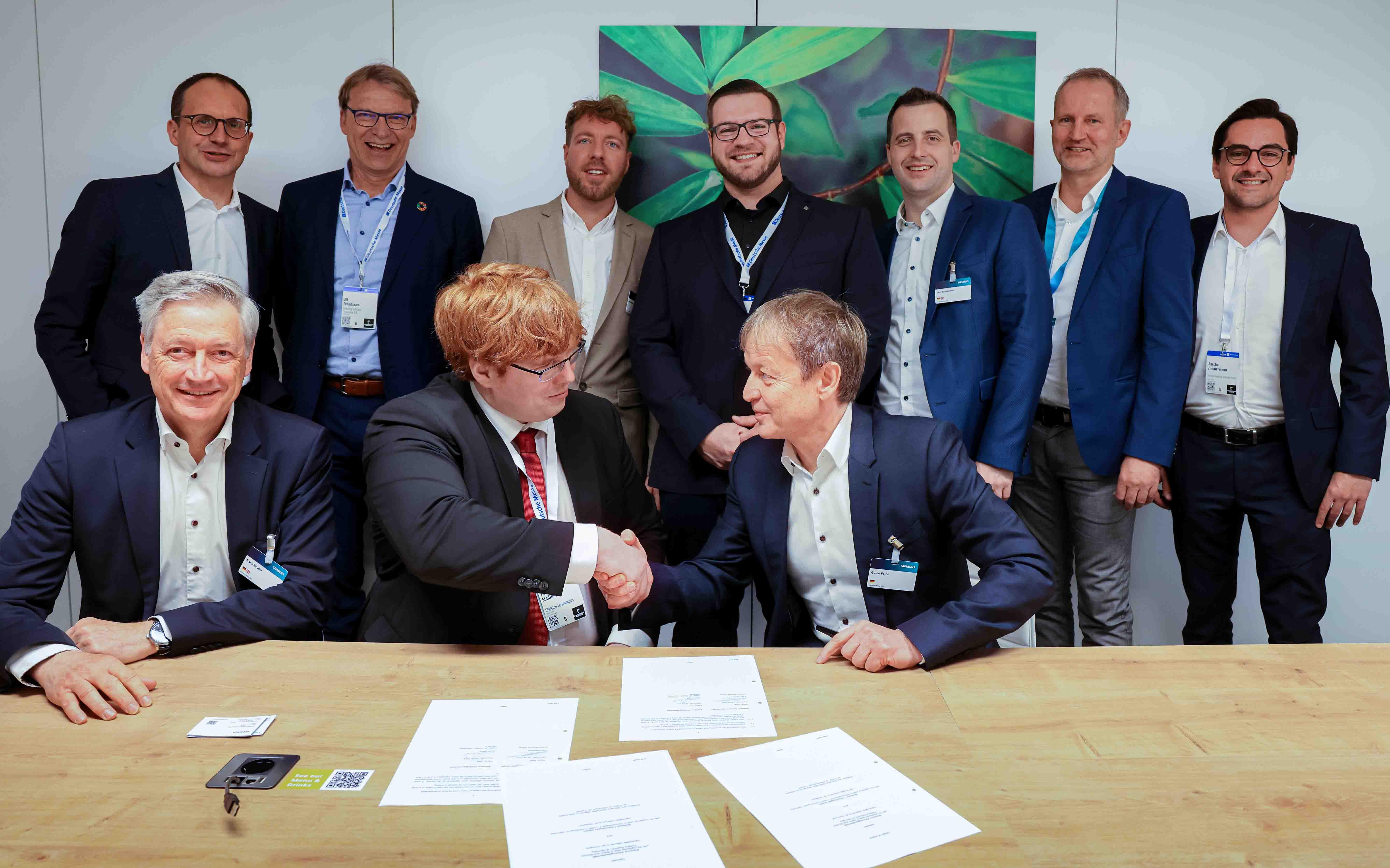
A recent European technology deal offers an interesting answer. On 6 October 2026, German enterprise software giant SAP announced an agreement to acquire Belgian AI startup TechWolf, a company that helps businesses understand the work employees perform and the skills they use.
The acquisition is intended to strengthen SAP’s workforce intelligence capabilities by integrating TechWolf’s technology into its enterprise software ecosystem. The financial terms were not disclosed, and the transaction is expected to close in the fourth quarter of 2026, subject to customary closing conditions and regulatory approval.
The announcement highlights a growing area of the technology industry: AI-powered workforce intelligence. Rather than focusing exclusively on automating individual tasks, these systems aim to help organisations understand how work is changing, identify skill gaps and make better-informed decisions about their employees.
For Europe’s technology sector, the deal also demonstrates how a specialist startup can develop technology that becomes strategically valuable to a global enterprise software company.
1. What is TechWolf, and why is SAP acquiring it?
TechWolf is a Belgian technology company founded in Ghent that develops AI software to help large organisations understand the relationship between employees, workplace tasks and professional skills.
Traditional human resources systems typically store information such as job titles, qualifications, employment history and training records. However, these records do not always provide a complete picture of the work employees actually perform or the capabilities they use in their daily responsibilities.
For example, an employee working in marketing might regularly analyse data, automate reporting tasks and use AI tools to improve campaign performance. A conventional job description may not capture all these capabilities.
TechWolf aims to bridge that information gap by analysing information from connected HR and business systems to create a more continuously updated view of work and skills.
SAP’s planned acquisition will bring TechWolf’s proprietary Context Graph for Work, AI models and applied AI research team into its broader enterprise software ecosystem.
The technology is expected to become an important part of SAP SuccessFactors, SAP’s human resources and talent management platform. The companies intend to develop capabilities for workforce planning, skills development, internal mobility and organisational redesign.
The strategic logic is straightforward: if businesses can better understand their employees’ capabilities and the tasks that need to be completed, they may be able to make more informed decisions about recruitment, training and the deployment of their workforce.
2. Understanding the technology: What is a Context Graph for Work?
One of TechWolf’s central technologies is its Context Graph for Work, a data model designed to connect information about tasks, employee skills and external labour-market developments.
In simple terms, imagine a large company with thousands of employees across different departments and countries.
The company may already have HR software, project management tools, business applications and learning platforms. Each system contains useful information, but the information may be fragmented.
The HR system might record an employee’s job title. A business application might reveal the types of projects they support. A learning platform might contain details of their training. Yet the organisation may struggle to combine these separate pieces of information into a useful picture of its capabilities.
A context graph aims to connect relevant information so that businesses can understand relationships between work, skills and organisational requirements.
This could help managers answer questions such as:
Which skills are becoming more important as the business adopts AI?
Which teams may need additional training?
Could existing employees move into new roles with suitable development?
Which capabilities should the company recruit externally?
How might changing business priorities affect workforce planning?
These questions are particularly important as AI changes the tasks associated with many professional roles.
However, the quality of the resulting insights depends on the data available, the accuracy of the models and how well the system reflects the organisation’s actual work. AI-generated skill assessments should support informed decisions rather than automatically determine an employee’s value or future.
3. Why this deal matters in the age of AI agents
The TechWolf acquisition also connects to another major enterprise technology trend: AI agents.
Unlike conventional software that primarily responds to direct commands, AI agents can be designed to complete multi-step tasks within defined permissions and workflows. Businesses are exploring their use in areas such as customer support, financial operations, software development and human resources.
But agents need reliable context to produce useful results.
Consider an AI assistant helping a manager plan a new project. It may need to understand the skills required, the capabilities available within the organisation and the employees who could be suitable for the work.
Without dependable information about jobs and skills, the assistant may generate generic recommendations that do not reflect the company’s real workforce.
SAP has positioned TechWolf’s technology as a grounding layer for AI-driven workforce and talent management. The company expects the combined capabilities to support more informed AI-assisted decisions involving skills-based hiring, workforce planning and job redesign.
This does not mean that TechWolf independently solves every challenge associated with AI agents. Rather, its technology is intended to provide structured, relevant information that can make enterprise AI applications more useful.
The broader lesson for technology businesses is that successful AI products often require more than a capable language model. They also need accurate data, business context, permissions and integration with existing systems.
4. How businesses could use workforce intelligence
The technology has several potential applications across large organisations.
Skills-based recruitment
Employers often use job titles, qualifications and previous experience to screen candidates. However, these indicators do not always capture the complete range of skills needed for a role.
Workforce intelligence systems could help employers define the capabilities required for particular positions and compare those requirements with the skills available internally.
This may also help identify when internal development is a realistic alternative to external recruitment.
Employee training and reskilling
As businesses adopt AI tools, employees may need new technical, analytical or management skills.
A workforce intelligence platform could help identify where capabilities are changing and where training might be useful.
For example, a finance team introducing AI-assisted reporting may need additional skills in data validation, AI oversight and interpreting automated outputs.
By connecting information about work requirements with existing capabilities, businesses may be better positioned to prioritise training.
Internal mobility
Companies sometimes recruit externally for roles that could potentially be filled by existing employees with appropriate support and development.
Better skills information could help managers identify employees whose capabilities may transfer to other positions.
This could create opportunities for career development while helping businesses use their existing workforce more effectively.
Organisational redesign
When AI automates some tasks, jobs may change rather than disappear completely. Employees could spend less time on repetitive administrative work and more time on reviewing results, managing exceptions or handling complex decisions.
Workforce intelligence may help organisations understand these changes and plan for different combinations of human work and automation.
The results will depend on how responsibly companies implement these systems and whether managers use the information to support employees rather than simply reduce headcount.
5. Why SAP wants to strengthen SuccessFactors
SAP serves businesses that rely on enterprise software to manage processes such as finance, procurement, supply chains and human resources.
Its SuccessFactors platform is designed to support HR operations, talent management and employee development.
Integrating TechWolf’s technology could give SAP additional capabilities for connecting information about skills and tasks with broader enterprise data.
This is strategically relevant because workforce planning is not isolated from the rest of a business. Hiring decisions, for example, can affect operating costs, project delivery and the ability to execute a company’s strategy.
Similarly, decisions about training may depend on the technologies a business plans to adopt, the markets it intends to enter and the capabilities it needs to develop.
SAP’s ambition is to connect these decisions more closely with enterprise information and AI-assisted workflows.
The acquisition also illustrates a common pattern in enterprise technology: large software companies acquire specialist businesses to add capabilities that would otherwise take time to develop internally.
For TechWolf, joining SAP could provide access to a much larger enterprise ecosystem and opportunities to expand its technology to additional customers. Whether those opportunities translate into widespread adoption will depend on execution and customer demand.
6. What the acquisition reveals about Europe’s AI startup ecosystem
TechWolf’s story began in Belgium and grew from research and entrepreneurship into a specialist enterprise technology business.
Its agreement with SAP highlights an important route to scale for European startups: building focused technology that solves a complex problem for established industries.
Not every successful startup needs to develop a general-purpose AI model or compete directly with the largest US technology companies. Some can build valuable businesses by specialising in data infrastructure, workflow software, cybersecurity, industrial applications or enterprise analytics.
These markets often require deep knowledge of customer operations and the ability to integrate with existing systems.
Europe has a substantial base of industrial companies, financial institutions, manufacturers and enterprise software users. Startups that understand these sectors may be able to develop solutions tailored to their operational needs.
However, building strong technology is only one part of the challenge. Startups must also secure customers, demonstrate measurable benefits, protect sensitive data and develop reliable commercial operations.
An acquisition can provide a path to wider distribution, but it is not the only route. Some companies will grow independently, while others may use strategic partnerships or acquisitions to reach new markets.
For founders, the key question is whether the product solves a problem important enough that customers will continue paying for it as the market evolves.
7. The risks: Employee privacy, bias and responsible AI
Workforce intelligence can offer useful insights, but analysing information about employees creates important responsibilities.
First, companies must establish a clear legal basis for processing personal data and comply with applicable privacy requirements, including the EU General Data Protection Regulation where relevant.
Second, organisations should be transparent about which information is collected, how it is used and who can access the resulting insights.
Third, AI-generated assessments can be incomplete or biased. An employee’s recorded activity may not fully reflect their contribution, expertise or potential. People who perform less visible work could be overlooked if systems rely too heavily on easily measurable data.
There is also a risk that managers may treat algorithmic recommendations as objective judgments when they are actually based on imperfect information and model assumptions.
Responsible implementation should therefore include human oversight, data quality checks, access controls and ways for employees to challenge inaccurate records or inappropriate conclusions.
Businesses should also assess the implications of workplace monitoring and ensure that the technology is used for legitimate organisational purposes.
The objective should be to help employees and organisations understand changing skills requirements—not to turn every workplace activity into a simplistic performance score.
8. What businesses and entrepreneurs should watch next
The acquisition agreement is only the beginning of the next stage. The transaction was expected to close in the fourth quarter of 2026, subject to the usual conditions, including regulatory approval. As of 18 October 2026, it should not be described as a completed acquisition unless a subsequent announcement confirms completion.
Businesses should watch how SAP integrates TechWolf’s technology into SuccessFactors and whether the combined platform produces measurable improvements in workforce planning and skills development.
Potential indicators of progress include the quality of skills information, the usefulness of internal mobility recommendations, the ability to identify training needs and the practical value delivered to HR and business teams.
Entrepreneurs can also learn from the business model. As AI adoption grows, organisations will need systems that connect AI tools with reliable business information and existing workflows.
That creates potential opportunities in enterprise data management, employee training, AI governance, workforce analytics and software integration.
The strongest products are likely to be those that solve specific operational problems and demonstrate value without compromising privacy, fairness or trust.
Conclusion: The future of enterprise AI depends on understanding work
SAP’s agreement to acquire TechWolf highlights how the next phase of enterprise AI may extend beyond chatbots and automated content generation.
Businesses increasingly need to understand how work is performed, which skills are available and how their workforce may need to change as AI technologies develop.
TechWolf’s Context Graph for Work is designed to connect information about tasks, employee capabilities and labour-market developments. SAP intends to use this technology to strengthen its workforce management offerings and support more informed AI-assisted decisions.
The deal also demonstrates the potential of European startups that develop specialist technology for complex business problems.
Nevertheless, the benefits will depend on successful integration, reliable data, responsible implementation and demonstrable value for customers.
As AI reshapes the workplace, organisations that combine useful technology with good workforce planning and respect for employees may be better positioned to adapt. The challenge is not simply to automate more work, but to understand how people, skills and technology can work together more effectively.