French Startup Hylight Raises €13 Million To Replace Helicopters With Hydrogen-Powered Airships
HyLight Raises €13 Million for Hydrogen-Powered Inspection Airships
Europe's infrastructure networks are essential to everyday life. Electricity travels through extensive power grids, gas pipelines support industrial and residential energy needs, and railway networks connect cities, businesses and communities. Keeping these systems safe requires regular inspections, accurate data and timely maintenance.
However, inspecting infrastructure that stretches across hundreds or thousands of kilometres can be expensive, time-consuming and operationally challenging.
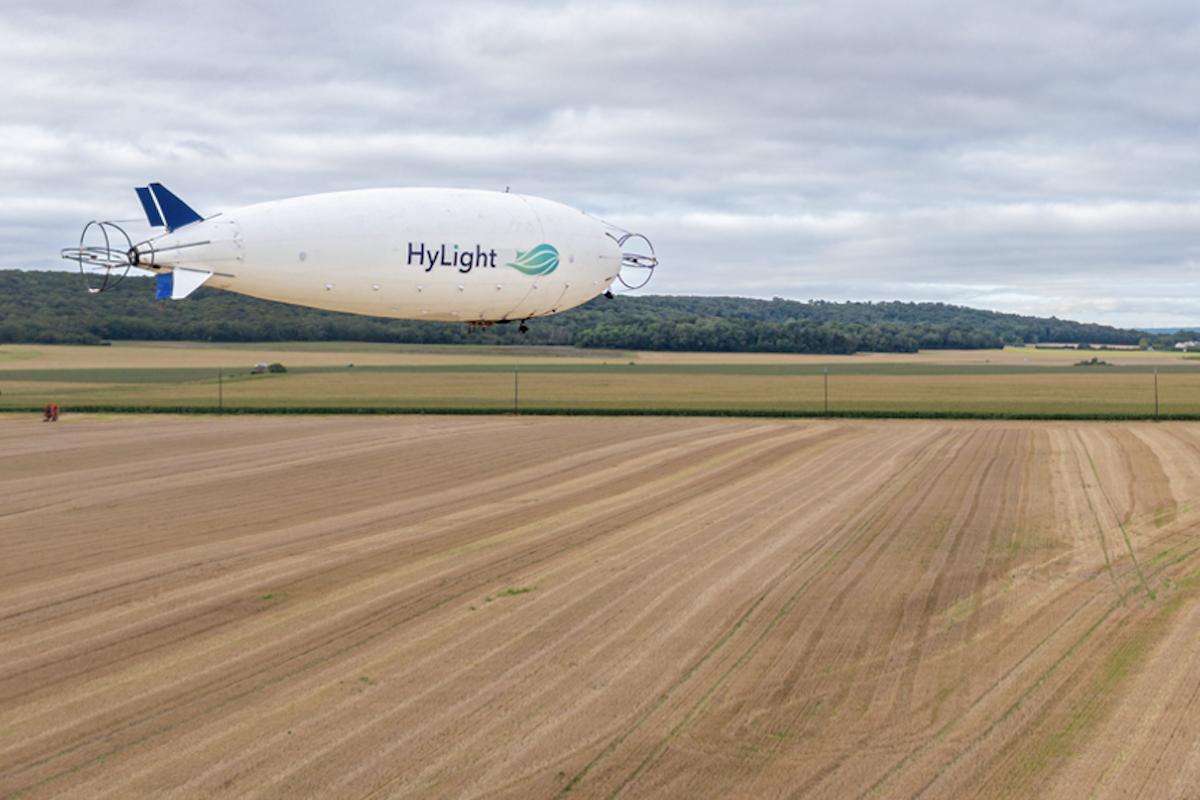
French startup HyLight is developing a different approach. The company uses autonomous, hydrogen-powered airships equipped with sensors and data-analysis technology to inspect critical infrastructure from the air.
On October 12, 2026, HyLight announced that it had raised €13 million in funding from Rubio Impact Ventures, DRW and Teampact Ventures, with existing investors Y Combinator and Ring Capital also participating. The company plans to use the investment to expand its aircraft fleet, strengthen its data-analysis capabilities and accelerate commercial expansion across Europe.
The announcement represents an important milestone for the French startup and highlights a growing opportunity for European entrepreneurs: developing practical technologies that improve industrial efficiency while potentially reducing environmental impact.
What Is HyLight?
Founded in 2022, HyLight develops autonomous hydrogen-powered airships designed for aerial inspections.
Its aircraft, known as HyLighters, are intended to collect detailed information about infrastructure such as electricity transmission lines, gas pipelines and railway corridors. The company combines aircraft engineering with software and artificial intelligence to transform collected data into information that maintenance teams can use.
The idea addresses a longstanding industrial challenge. Infrastructure operators must regularly check large areas for defects, vegetation-related risks, damage and other potential problems.
Traditional inspection methods can involve helicopters, ground-based teams, drones and fixed monitoring systems. Each method has strengths, but none is ideal for every situation.
Helicopters can cover large distances, but their operation can be costly and fuel-intensive. Smaller drones may be suitable for local inspections but can face limitations involving flight endurance, operating conditions and regulatory requirements. Satellite imagery can cover extensive areas, although it may not provide the level of detail needed for every inspection task.
HyLight is attempting to occupy the space between these approaches by combining long-duration flight, specialised sensors and automated analysis.
The company says it has already carried out inspections over thousands of kilometres and begun working with major infrastructure operators in France.
Why Infrastructure Inspection Is a Significant Market
Infrastructure inspection is not simply a technical task. It is part of a much larger process involving safety, reliability, maintenance budgets and business continuity.
Consider an electricity transmission network. Vegetation growing too close to power lines can create risks, while damaged equipment may require repair before it causes an outage. Similarly, pipeline operators need to identify potential leaks and monitor the condition of their assets.
Railway operators must assess infrastructure conditions to support safe and reliable services.
When inspections are inefficient or problems go undetected, the consequences can include expensive repairs, service disruption, environmental damage and safety risks.
Infrastructure operators therefore need tools that can collect reliable information, cover large geographical areas and help maintenance teams prioritise their work.
For startups, this creates opportunities to develop technologies that improve inspection frequency, data quality and the speed at which problems are identified.
The challenge is that industrial customers typically require strong evidence before adopting new equipment. A technology must demonstrate reliability, provide useful data and integrate into existing maintenance procedures.
HyLight's commercial opportunity depends on showing that its approach can meet these requirements while offering meaningful advantages over established inspection methods.
How Do Hydrogen-Powered Airships Work?
HyLight's aircraft combine an airship-style platform with electric propulsion powered by hydrogen-based energy systems.
According to the company's published description, its HyLighter aircraft measures approximately 12 metres in length and is designed for flights lasting up to ten hours. The company also reports a target range of 350 kilometres and the ability to carry up to 10 kilograms of sensors.
These specifications are relevant because infrastructure inspection often involves long routes rather than a single destination.
An aircraft that can remain airborne for extended periods may be able to inspect longer sections of a network during a mission, depending on conditions, route requirements and operating procedures.
The platform can carry equipment such as cameras, LiDAR sensors and methane detectors.
LiDAR uses laser measurements to produce detailed information about distances and physical structures. It can help create three-dimensional representations of infrastructure and surrounding vegetation.
Cameras can capture visual information about assets, while methane detectors can help identify potential gas leaks in suitable applications.
The objective is to gather detailed information during flight and process it into useful inspection outputs.
Hydrogen-powered electric propulsion is another element of the company's approach. The company describes its aircraft as producing no direct emissions during flight. The overall environmental impact, however, also depends on factors such as how the hydrogen is produced, how equipment is manufactured and the full operational lifecycle.
For this reason, the environmental benefits should be assessed across the complete system rather than assumed from the aircraft's power source alone.
How Artificial Intelligence Adds Value
Collecting large amounts of aerial data is only useful if organisations can interpret it efficiently.
Infrastructure inspections may generate thousands of images and substantial quantities of sensor data. Reviewing every item manually can require significant time and specialist expertise.
HyLight combines its aircraft operations with software and AI-based analysis intended to identify and locate defects and vegetation-related risks.
The company says its system can automatically identify and geolocate more than 50 types of defects and vegetation-related risks across power networks. These capabilities are intended to help maintenance teams focus on relevant findings instead of manually reviewing large collections of raw images.
This approach illustrates a broader trend in industrial technology: the combination of specialised hardware with software that makes collected data easier to use.
The same principle appears in manufacturing, agriculture, logistics and energy management. Sensors collect information, analytical systems identify patterns, and human operators use the results to make decisions.
For infrastructure owners, potential benefits include better visibility into asset conditions and more targeted maintenance planning. Actual savings and improvements depend on performance in operational environments and how the technology fits into existing processes.
AI should support inspection and decision-making, not remove the need for appropriate verification, safety procedures and qualified personnel.
Who Is Investing in HyLight?
HyLight's €13 million funding round attracted investors with interests in technology, climate innovation and business growth.
Rubio Impact Ventures led the round, with participation from DRW and Teampact Ventures. Existing investors Y Combinator and Ring Capital also participated.
The participation of existing investors can indicate continued support for a company's direction, although it does not guarantee future commercial success.
For a company developing aircraft and industrial hardware, funding is especially important because product development typically involves more than software engineering. It can require physical testing, manufacturing facilities, safety processes, regulatory approvals and field operations.
The investment provides HyLight with additional resources to move beyond early deployments and work towards a larger operating fleet.
The company's ability to convert that capital into dependable products and repeatable customer contracts will be an important factor in its next stage of growth.
What Will HyLight Do With the New Funding?
The company has identified several priorities for its expansion.
1. Expand aircraft production
HyLight intends to industrialise its fleet and increase the number of aircraft it can operate.
The company reported that it had four aircraft in operation and aims to have up to 15 HyLighters operating simultaneously in 2027.
Achieving this target will require careful attention to production capacity, component supply, maintenance, staff training and operational reliability.
For hardware startups, scaling production is often considerably more complicated than adding new software users. Every additional aircraft must be built, tested, maintained and operated within applicable safety requirements.
2. Improve automated data analysis
HyLight plans to strengthen its data and AI capabilities.
More efficient analysis could help turn collected information into reports that infrastructure operators can act on more quickly. It may also help the company manage increasing quantities of data as its fleet grows.
The challenge is to ensure that automated findings are reliable, clearly presented and useful to the people responsible for maintenance decisions.
3. Expand across Europe
Germany and the Netherlands are among the company's priority markets for expansion, according to the funding announcement. HyLight also plans to recruit approximately 50 employees across engineering, AI and data, operations, regulatory affairs and business development.
Entering new markets requires more than identifying prospective customers. The company must understand local infrastructure requirements, operating conditions, regulatory frameworks and procurement processes.
Building relationships with established infrastructure operators may therefore be just as important as developing the aircraft itself.
What This Means for European Climate Tech Startups
HyLight's funding round demonstrates that climate technology can extend beyond renewable energy generation and electric vehicles.
Some climate-focused businesses concentrate on replacing existing energy sources. Others develop technologies that make industrial operations more efficient, reduce unnecessary travel or help organisations monitor environmental risks.
Infrastructure inspection is one example of a market where operational efficiency and environmental considerations can overlap.
If a new inspection method can deliver the required information with fewer emissions, lower costs or improved safety, it may offer value to customers while supporting environmental objectives. Those benefits must be demonstrated in practice rather than assumed.
For European entrepreneurs, the wider lesson is to look for problems where an existing industrial process is expensive, inefficient or difficult to scale.
Potential opportunities include:
Industrial monitoring: Developing sensors and software to monitor equipment conditions and identify potential failures.
Environmental measurement: Building tools that help organisations track emissions, pollution or changes in ecosystems.
Predictive maintenance: Using operational data to identify equipment that may require attention before a failure occurs.
Inspection analytics: Turning drone, camera and sensor data into actionable reports for infrastructure operators.
Energy efficiency: Helping factories, buildings and transport systems reduce waste and improve operational performance.
These markets can be attractive, but they often require specialised expertise, long sales cycles and extensive customer validation.
Founders should identify a specific operational problem, test their proposed solution with potential buyers and determine whether the financial benefits justify adoption.
The Challenges HyLight Must Overcome
Despite its funding and early deployments, HyLight faces several challenges common to industrial technology startups.
Regulatory complexity: Aircraft operating beyond visual line of sight require appropriate authorisations and safety procedures. Permissions and operating conditions can vary by jurisdiction and mission.
Manufacturing scale: Increasing production while maintaining quality and reliability can put pressure on suppliers, engineering teams and operational processes.
Customer adoption: Infrastructure operators may need to evaluate new technology carefully before changing established inspection procedures. Demonstrating consistent performance will be critical.
Competition: HyLight must compete with existing inspection methods and emerging alternatives, including drones, helicopters, satellite-based monitoring and other specialised aircraft.
Environmental performance: Hydrogen-based propulsion does not automatically make an entire operation emissions-free. The lifecycle impact of hydrogen production, equipment manufacturing and logistics remains relevant.
Commercial economics: Customers will compare the full cost of a new service with the cost, quality and reliability of current solutions. The company must demonstrate that its technology delivers sufficient value.
The €13 million investment gives HyLight more resources to address these challenges, but continued growth will depend on execution, customer satisfaction and repeatable commercial demand.
Why This Startup Story Matters
HyLight offers a useful example of how a European startup can combine several disciplines to address an established industrial problem.
Its business involves aircraft engineering, hydrogen-based propulsion, sensor technology, software, artificial intelligence and infrastructure operations. Rather than treating these as separate products, the company brings them together in a service designed around customer needs.
This integrated approach can create advantages when a startup understands both the technology and the practical environment in which customers will use it.
However, the same approach also increases complexity. A company must develop the technology, operate it safely, maintain equipment and deliver information that customers trust.
For founders considering climate tech or deep tech, HyLight's progress reinforces the importance of balancing ambitious innovation with practical execution.
Conclusion: A New Opportunity for Sustainable Industrial Innovation
HyLight's €13 million funding round marks a significant step for the French startup as it prepares to expand its hydrogen-powered inspection airships across Europe.
The company's approach combines autonomous aircraft, specialist sensors and automated data analysis to address the ongoing challenge of monitoring critical infrastructure. Its plans to expand production, hire employees and enter additional European markets show how the funding will support the next stage of its development.
For the wider startup ecosystem, the story demonstrates that opportunities in climate technology can be found in established industrial markets as well as in emerging consumer products.
The long-term test will be whether HyLight can deliver reliable inspections, meet customer requirements and demonstrate compelling operational and environmental benefits at scale.
If it succeeds, the company could help shape a new approach to infrastructure monitoring while providing an example of how European founders can turn specialised engineering into a commercially relevant business.