Green Technology: How European Startups Are Turning Sustainability Into Business Opportunities
Green Technology in Europe: Opportunities for Startups
Introduction: Can Sustainability Become a Business Advantage?
For a long time, sustainability was often treated as an additional responsibility for businesses. Companies introduced recycling initiatives, reduced paper consumption or published environmental commitments, but these efforts were not always connected to their main business strategy.
That approach is changing.
Today, businesses are increasingly exploring ways to reduce energy consumption, use resources more efficiently and develop products that create less waste. For entrepreneurs, these challenges are opening up opportunities to build new services, improve existing industries and develop technologies that customers are willing to pay for.
Europe is an important market for this transition. Its industrial base, research institutions, technology companies and environmental policies are encouraging the development of solutions that support cleaner production and more efficient resource use.
The European Union's Innovation Fund, for example, supports innovative technologies that can reduce greenhouse gas emissions and accelerate industrial decarbonisation. Its focus includes clean technology manufacturing and projects aimed at reducing emissions across energy-intensive sectors.
For startup founders, the opportunity is not limited to inventing the next revolutionary battery or developing a new renewable energy system. It can also involve helping businesses monitor electricity consumption, reduce packaging waste, repair equipment, manage resources or make existing operations more efficient.
The important question is how entrepreneurs can turn these challenges into viable businesses without losing sight of customer needs and commercial realities.
1. Why Green Technology Is Becoming Important for Businesses
Businesses face several pressures that make sustainability increasingly relevant to their operations.
Energy prices can affect manufacturing costs, waste disposal can create additional expenses, and inefficient supply chains can make companies less competitive. At the same time, customers, business partners and investors may ask organisations to explain how they manage environmental risks.
Green technology can help companies respond to these challenges through practical improvements.
Consider a small manufacturing business that operates energy-intensive machinery. If it cannot identify when equipment consumes the most electricity, it may struggle to find meaningful savings. A monitoring system that tracks consumption and highlights unusual patterns could help management make better operational decisions.
Similarly, a food business that regularly discards unsold products might benefit from improved demand forecasting, inventory management or partnerships that redirect suitable surplus food.
Neither solution requires every business to rebuild its operations from scratch. Both focus on improving an existing process.
For entrepreneurs, this is an important lesson: the best sustainability opportunities often begin with a measurable business problem rather than an abstract environmental ambition.
A successful green technology company must offer a clear reason for customers to adopt its solution. That reason might be lower operating costs, better resource management, improved compliance processes or a more competitive product.
2. Renewable Energy Creates Opportunities Beyond Power Generation
Renewable energy is often associated with large solar farms, wind turbines and major infrastructure projects. However, the wider renewable energy ecosystem also creates opportunities for smaller companies.
Businesses need support with installation, monitoring, maintenance, energy management and equipment optimisation. Property owners may need help understanding which improvements are financially worthwhile. Industrial facilities may want to combine renewable generation with battery storage or smarter energy controls.
Startups can focus on these supporting services rather than attempting to compete directly with established energy producers.
For example, a software company could develop a platform that helps small commercial buildings monitor electricity use and identify opportunities to reduce unnecessary consumption. Another business could specialise in analysing energy data for local manufacturers.
Entrepreneurs with engineering expertise might explore maintenance services, monitoring equipment or solutions that help customers integrate different energy technologies.
However, founders should avoid assuming that every renewable energy investment automatically produces attractive returns. Project economics depend on local electricity prices, installation costs, available space, grid connections, incentives and the customer's consumption patterns.
Before launching a product, entrepreneurs should identify the customer segment they intend to serve and understand the practical barriers that prevent adoption.
A focused service that solves one recurring problem may be easier to commercialise than a broad platform designed to address every aspect of energy management.
3. The Circular Economy: Finding Value in What Businesses Throw Away
Traditional business models often follow a linear pattern: extract resources, manufacture products, sell them and eventually discard them.
The circular economy explores ways to keep products and materials useful for longer through repair, reuse, refurbishment, remanufacturing and recycling.
This creates opportunities for entrepreneurs across multiple industries.
An electronics startup might specialise in refurbishing business equipment. A fashion business could develop repair services or resale systems. A manufacturing company might find customers for materials that would otherwise become waste.
Packaging offers another example. Businesses that ship products frequently may be interested in reusable packaging systems, improved material tracking or solutions that reduce unnecessary packaging.
The challenge is to make circular practices convenient and commercially attractive.
Customers may support sustainability in principle but still choose a traditional option if the alternative costs too much, takes longer or creates additional work.
Founders should therefore design their business models around convenience, reliability and clear economic value.
For example, a company offering refurbished laptops to businesses could differentiate itself through quality testing, warranties, reliable delivery and after-sales support. The environmental benefit strengthens the proposition, but the customer still needs a dependable product at a competitive price.
This is where innovation becomes commercially meaningful: it makes resource efficiency practical for ordinary customers.
4. Sustainable Agriculture and Food Technology
Agriculture and food production offer another area for green innovation.
Farmers must manage water, soil quality, energy, fertiliser and changing weather conditions. Food businesses also face challenges involving storage, transportation, spoilage and demand forecasting.
Technology can help address some of these problems.
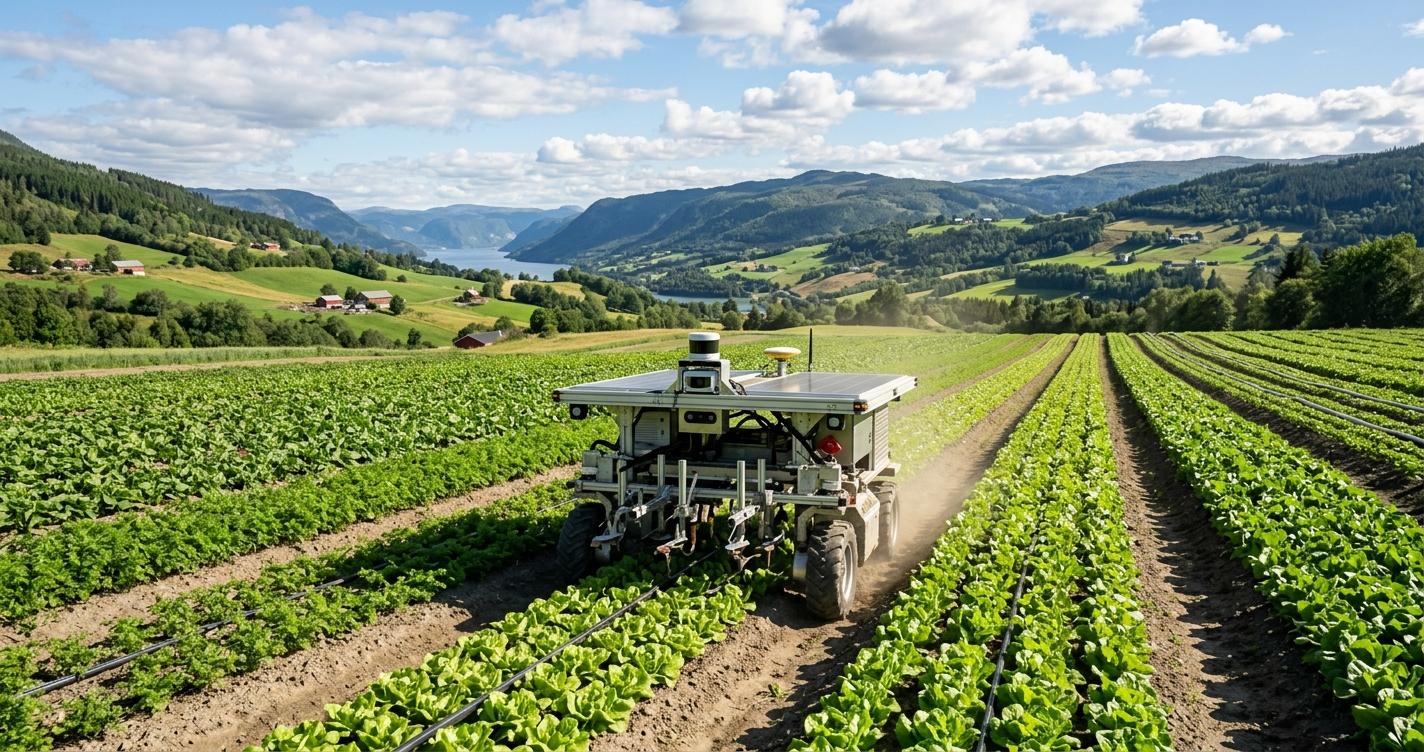
Sensors may allow growers to monitor soil moisture more accurately. Data tools can help businesses plan irrigation. Improved storage systems can extend the usable life of certain products, while inventory software can help retailers reduce avoidable food waste.
Startups can develop solutions for farmers, food processors, distributors, restaurants and supermarkets.
However, founders should understand the realities of the industry before developing a product. A solution that works in a controlled demonstration may not perform equally well across different farms, climates or production systems.
Affordability is particularly important for customers operating on tight margins.
Entrepreneurs should test their ideas with real users, measure whether the technology improves productivity and establish how quickly customers can recover the cost of adoption.
Working with agricultural organisations, research institutions or local distribution partners may help startups validate their products and reach the right customers.
5. Helping Small Businesses Measure and Reduce Their Environmental Impact
Large organisations may have dedicated sustainability teams, specialist consultants and sophisticated reporting systems. Smaller companies often lack these resources.
This creates an opportunity for startups that simplify sustainability management.
A business might develop software that helps small companies organise energy bills, estimate operational emissions, track waste or prepare information requested by customers and suppliers.
Another company could provide practical consulting supported by affordable digital tools.
The key is to avoid overwhelming customers with complex dashboards and information they cannot use.
A small business owner is more likely to value a straightforward report showing where energy costs are increasing than a complicated platform filled with technical measurements.
Entrepreneurs should also distinguish between estimated environmental indicators and verified measurements. Claims about emissions reductions or environmental performance need appropriate evidence, especially when they are used in marketing or formal reporting.
Where applicable, startups should understand relevant European reporting rules and environmental claims requirements rather than assuming every small business faces the same obligations.
The strongest products will make the process easier while helping customers understand what the information actually means for their decisions.
6. Sustainable Innovation Must Be Financially Sustainable Too
A green technology startup needs a workable business model just like any other company.
An idea may offer environmental benefits but still struggle commercially if customers are unwilling to pay, implementation is too expensive or the technology requires constant maintenance.
Founders should evaluate the total cost of developing, delivering and supporting their solutions.
This includes research, equipment, software, staffing, certification, installation, customer acquisition and ongoing operations.
They should also consider who receives the financial benefit. If a technology saves a customer money but requires a large upfront investment, financing or subscription options may make adoption easier.
For example, a company that helps commercial buildings monitor energy consumption might charge an installation fee and a recurring software subscription. Another business might offer maintenance contracts that provide predictable revenue.
These are possible business models, not guarantees of profitability. Their suitability depends on customer demand, competition and operating costs.
Startups should test pricing early, speak with potential buyers and establish measurable targets before scaling.
Environmental impact and commercial performance should be evaluated together. A solution that cannot survive financially may struggle to deliver lasting environmental benefits.
7. How European Entrepreneurs Can Find Support for Green Innovation
Developing a new technology can require expertise, equipment and funding that a young company cannot easily access on its own.
European entrepreneurs can explore several potential sources of support, including university partnerships, startup accelerators, research collaborations and relevant public funding programmes.
The European Innovation Council supports innovative companies working in areas including clean technologies and other advanced technology fields. The EU Innovation Fund also supports qualifying projects that contribute to industrial decarbonisation.
However, these programmes are not suitable for every startup. Eligibility rules, funding structures, project requirements and application deadlines vary.
A founder developing a small energy-monitoring application, for example, may have very different funding needs from a company building industrial-scale carbon capture equipment.
Before applying, entrepreneurs should define their technical objectives, understand their development stage and identify programmes aligned with their specific project.
Partnerships can be valuable even when direct funding is not immediately available. Universities may provide technical expertise, pilot sites can help test products, and established businesses may become early customers.
The most useful support is the kind that helps a startup move closer to a validated product and paying customers.
8. A Practical Roadmap for Building a Green Technology Startup
Entrepreneurs interested in sustainable innovation can begin with a structured approach.
Step one: Choose a specific problem. Focus on a measurable challenge, such as excessive energy consumption, packaging waste or inefficient resource use.
Step two: Identify the customer. Determine who experiences the problem, who makes purchasing decisions and who would benefit financially from solving it.
Step three: Validate the opportunity. Interview potential customers and examine how they currently manage the issue. Look for evidence of genuine demand rather than relying on assumptions.
Step four: Build a small pilot. Test a prototype or service with a limited group of users. Avoid investing heavily before the solution has demonstrated practical value.
Step five: Measure the results. Track relevant indicators, such as costs reduced, materials recovered, energy saved or waste avoided. Use credible measurements and clearly state any limitations.
Step six: Improve the business model. Refine pricing, delivery, customer support and implementation based on feedback.
Step seven: Scale responsibly. Expand when the technology works reliably, customers are willing to pay and the company can deliver the solution consistently.
This approach helps founders reduce risk while ensuring that their environmental ambitions remain connected to real-world business needs.
Conclusion: Turning Environmental Challenges into Business Opportunities
Green technology is creating opportunities for European entrepreneurs to rethink how products are made, how resources are used and how businesses operate.
From renewable energy services and circular economy solutions to sustainable agriculture and environmental data tools, there are many ways to build a company around practical improvements.
Success, however, requires more than a compelling environmental mission. Founders need to understand their customers, develop reliable products, measure results and establish business models that can support long-term growth.
The most promising ideas may not always be the most complicated. Sometimes, the opportunity lies in helping an existing industry eliminate waste, use less energy or make better decisions with the resources it already has.
For entrepreneurs willing to combine commercial thinking with responsible innovation, sustainability can become more than a business obligation. It can be the starting point for useful products, stronger customer relationships and new opportunities for growth.
The future of green innovation will depend not only on developing better technologies, but also on making those technologies accessible, practical and financially viable for the businesses that need them.