Tesla Roadster Innovation: The Engineering Behind An Electric Sports Car Designed To Defy Gravity
Tesla Roadster Innovation: Inside the New Flying Electric Supercar
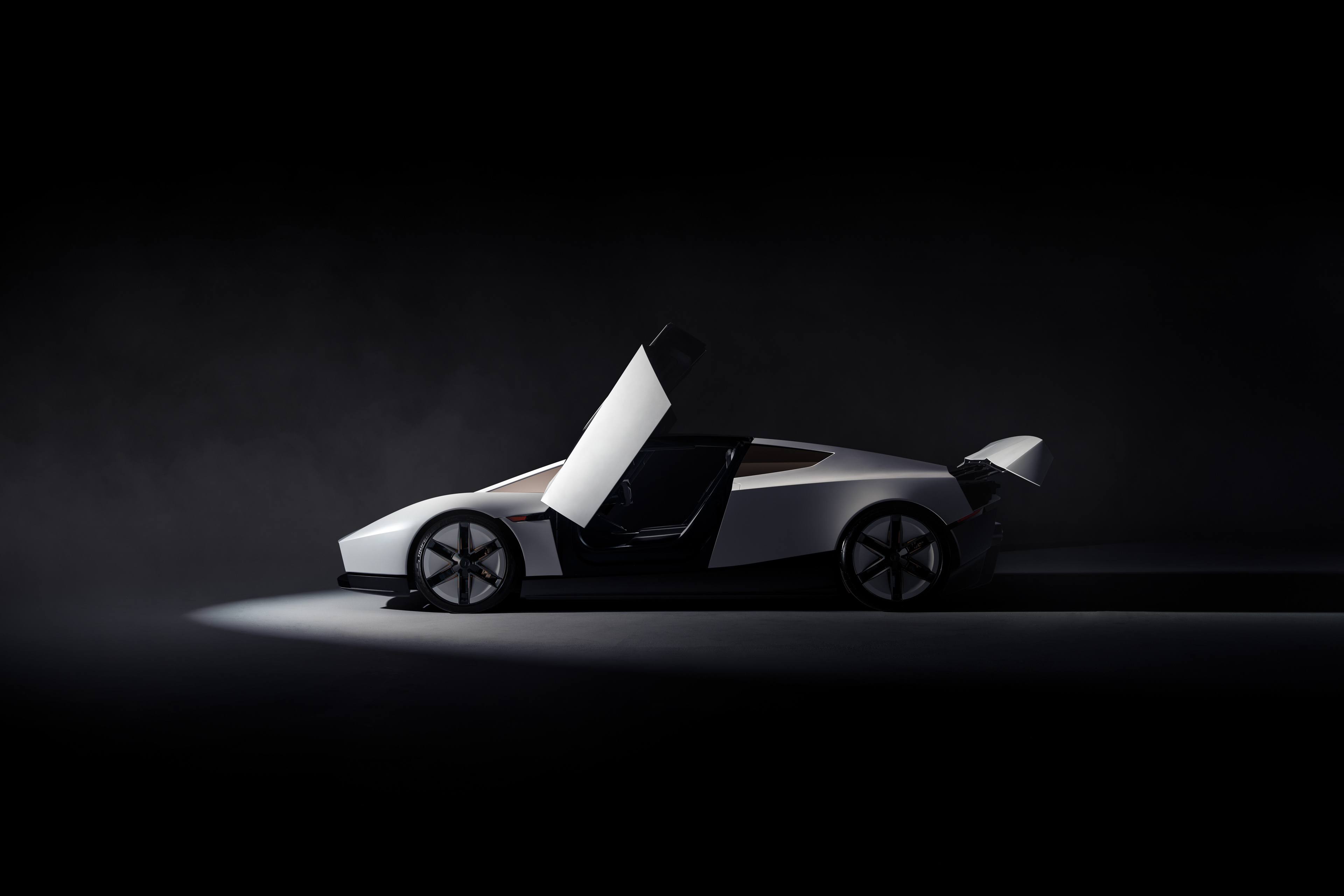
For decades, automotive innovation has focused on making vehicles faster, safer, more efficient and easier to control. Electric powertrains have already changed the performance capabilities of road cars, but Tesla's redesigned Roadster is attempting to push those boundaries even further.
Unveiled on October 15, 2026, the next-generation Tesla Roadster attracted global attention with a demonstration featuring unusual aerodynamic manoeuvres, brief airborne movements and rocket-inspired propulsion technology. Developed through a collaboration between Tesla and SpaceX, the concept combines electric sports-car engineering with technologies inspired by aerospace systems.
The demonstration included the vehicle moving along an inverted ramp, performing a mid-air rotation and returning to the ground. Tesla also presented a version equipped with cold-gas thrusters, which the company says can enable short airborne manoeuvres. Production is targeted for 2028, although the final production specifications and practical limitations remain important considerations.
The Roadster is not simply an experiment in making an electric car faster. It represents an exploration of how propulsion, aerodynamics, vehicle control and lightweight engineering might work together in a radically different sports-car design.
For the automotive industry, the key question is whether these innovations can move beyond an impressive demonstration and become reliable, safe and commercially viable technology.
1. Electric Performance Meets a New Generation of Engineering
Electric vehicles have a significant advantage when it comes to delivering power. Electric motors can produce strong torque from very low speeds, allowing rapid acceleration without the gear changes associated with many conventional combustion-engine vehicles.
Tesla's original Roadster helped demonstrate the potential of electric propulsion in a high-performance sports car. The new generation seeks to extend that idea through a redesigned platform and additional technologies intended to improve acceleration, stability and aerodynamic performance.
Tesla has presented ambitious performance targets for the new vehicle, including acceleration from zero to 60 miles per hour in less than one second for the Thrust configuration. This remains a manufacturer claim that must be assessed against final production specifications and independently verified performance.
The more important innovation is the combination of multiple engineering systems. Electric propulsion provides the primary driving power, while aerodynamic components and optional thruster technology are intended to expand the vehicle's performance envelope.
This integrated approach reflects a broader trend in automotive development: performance increasingly depends on how effectively software, electronics, materials and mechanical systems work together rather than on engine output alone.
2. Active Aerodynamics: Managing Air for Better Performance
Air resistance and aerodynamic lift can significantly affect a high-performance vehicle. At high speeds, designers must manage airflow to reduce drag while generating enough downforce to keep the car stable.
The Roadster's design incorporates active aerodynamic elements intended to adjust the vehicle's behaviour according to driving conditions.
Instead of relying entirely on fixed bodywork, active aerodynamic systems can change their configuration to prioritise different objectives. A lower-drag configuration can help reduce resistance, while a higher-downforce setup can improve grip and stability during performance driving.
These objectives involve trade-offs. Increasing downforce can improve tyre contact with the road but may also increase aerodynamic drag. Reducing drag can benefit high-speed efficiency but must not compromise stability.
The Roadster's engineering challenge is to coordinate these competing requirements in a vehicle designed for extreme performance.
This technology is relevant beyond supercars. Active aerodynamics and intelligent airflow management are important research areas for electric vehicles because energy efficiency has a direct effect on driving range. Reducing unnecessary resistance can help a vehicle travel farther using the same stored energy.
The broader innovation lesson is that improving performance does not always mean adding more power. Sometimes the better solution is to reduce the forces working against the vehicle.
3. A Suction-Based System Designed to Generate Downforce
One of the Roadster's most unusual proposed technologies is its multi-mode suction system.
According to Tesla, powered fans and a ground-sealing arrangement can remove air from beneath the vehicle, creating a pressure difference that pulls the car towards the surface. This principle can generate downforce even when the vehicle is moving slowly or stationary.
Traditional aerodynamic downforce generally depends on airflow around a moving vehicle. A fan-assisted system can potentially generate downforce without relying entirely on forward speed.
In theory, this could help a high-performance car maintain tyre contact with the road during demanding manoeuvres. Tesla has also presented the system as part of the technology that allows the Rocket configuration to perform extraordinary demonstrations.
However, the engineering challenges are considerable. Designers must manage power consumption, fan performance, heat, noise, system weight and the reliability of the seal beneath the vehicle. The system must also operate safely across different road surfaces and changing environmental conditions.
A dramatic demonstration does not establish how the system will perform during ordinary driving or under every real-world condition. Production testing will be essential to determine its practical capabilities.
Nevertheless, the underlying principle illustrates how established aerodynamic concepts can be applied in new ways when supported by modern electric motors, electronic controls and integrated vehicle design.
4. SpaceX-Inspired Cold-Gas Thrusters: The Technology Behind the Flight Demonstration
The most attention-grabbing aspect of the new Roadster is its proposed use of cold-gas thrusters.
Unlike conventional rocket engines that produce thrust through combustion, cold-gas propulsion releases stored pressurised gas through nozzles. The escaping gas creates a reaction force that can move or rotate the vehicle.
Cold-gas systems have applications in spacecraft, where small, precise changes in orientation are often required. The Roadster's concept applies this principle to an automotive platform.
Tesla's Rocket configuration is described as having multiple thrusters positioned around the vehicle. The company says these systems can provide forward, upward and rotational movement, enabling brief airborne manoeuvres.
This is not equivalent to a conventional flying car capable of sustained flight. The October demonstration showed short, controlled movements rather than long-distance airborne travel.
The distinction matters because sustained flight requires solutions for lift, energy supply, stability, navigation, landing and emergency handling. A road vehicle that briefly leaves the ground faces a very different engineering challenge from an aircraft designed to remain airborne.
The Roadster therefore represents an unusual exploration of propulsion technology, but the long-term feasibility of its airborne capabilities will depend on much more than the demonstration itself.
5. Three Configurations for Different Performance Goals
Tesla has described three Roadster configurations: Performance, Thrust and Rocket. Each targets a different balance of road use and advanced performance technology.
Performance: This configuration is presented as the road-focused version, featuring active aerodynamics and the multi-mode suction system.
Thrust: This version adds rear-mounted cold-gas thrusters and is positioned as a more extreme performance configuration.
Rocket: The most experimental version uses thrusters around the vehicle to enable the brief airborne and rotational manoeuvres showcased in the demonstration. Tesla describes this configuration as invite-only and notes that it is not approved for public-road use.
The three configurations illustrate an important product-development strategy: a shared engineering platform can support different customer needs and levels of technological complexity.
This approach can also help a company separate features suitable for broader production from technologies that require additional testing or specialised use.
For Tesla, the challenge will be to establish the final specifications, costs, production feasibility and regulatory requirements for each configuration.
6. Lightweight Materials and Integrated Vehicle Design
High-performance engineering requires more than powerful propulsion. Weight affects acceleration, braking, handling, energy consumption and the forces a vehicle must manage during manoeuvres.
Tesla's Roadster design emphasises lightweight, high-strength materials, including carbon fibre, titanium and magnesium. These materials can provide favourable strength-to-weight characteristics, although their actual benefits depend on the specific components and manufacturing methods used.
Reducing mass is particularly important for an electric vehicle because the battery pack itself can be heavy. Engineers must balance structural strength, battery capacity, occupant protection and the demands of performance systems.
Adding fans, pressure vessels, thrusters and associated control equipment creates another design challenge. Each additional component increases complexity and may add weight or consume energy.
The engineering task is therefore one of integration: the complete vehicle must deliver its intended performance without compromising safety, reliability or practical operation.
This is a valuable lesson for innovation teams in any industry. Adding more features does not automatically create a better product. The most successful designs often emerge from balancing competing requirements and eliminating unnecessary complexity.
7. The Challenges Between Prototype and Production
The Roadster's unveiling demonstrates an ambitious engineering direction, but it does not resolve every challenge associated with bringing the technology to market.
Tesla first announced the second-generation Roadster in 2017, and its production schedule has shifted repeatedly. The company now targets 2028 for production of the redesigned vehicle.
Before customers can evaluate the final product, several questions remain. These include the final production specifications, real-world performance, maintenance requirements, long-term reliability and the costs associated with the more experimental systems.
The flight-capable configuration also raises regulatory and safety questions. A vehicle designed to operate on public roads must meet applicable automotive requirements, while airborne operation introduces additional considerations.
These challenges do not negate the engineering achievement of developing a working demonstration. They simply show that a prototype and a production-ready product represent different stages of innovation.
A successful demonstration establishes that a concept can be explored under particular conditions. Production readiness requires repeatable performance, quality control, customer support and a credible safety framework.
For the Roadster, the next phase will be measured by how effectively Tesla converts its engineering ambitions into a product that can be manufactured and operated reliably.
8. What the Roadster Could Mean for Future Automotive Innovation
Even if the Roadster's flight-capable version remains a specialised product, its development raises broader questions about the future of vehicle engineering.
The integration of electric propulsion, active aerodynamics, software-controlled systems and unconventional propulsion technologies shows how the boundaries between automotive and aerospace engineering can become less distinct.
Some elements may remain limited to experimental or premium vehicles. Others, particularly improvements in aerodynamic efficiency, electronic control and lightweight design, may offer lessons for wider automotive applications.
However, there is no guarantee that every technology developed for an extreme sports car will be practical for ordinary vehicles. Cost, complexity, energy consumption and regulatory requirements determine whether an innovation can be adopted more broadly.
The real significance of the Roadster will depend on what its development teaches engineers and whether those lessons translate into useful, dependable technology.
Conclusion: An Ambitious Experiment in the Future of Performance Cars
The next-generation Tesla Roadster is an unusual combination of electric sports-car engineering and aerospace-inspired experimentation.
Its active aerodynamics, suction-based downforce system and proposed cold-gas thrusters explore new ways to manage vehicle stability, acceleration and movement. The October 2026 demonstration made those ambitions visible, but important questions remain about production, performance verification, safety and the practical limits of its airborne capabilities.
The Roadster should therefore be viewed neither as an ordinary electric supercar nor as a fully realised flying car. It is an ambitious engineering project whose long-term significance will depend on execution.
For the automotive industry, the broader lesson is that innovation requires more than spectacular ideas. It requires rigorous testing, thoughtful integration, reliable manufacturing and a clear understanding of how technology creates value for users.
If Tesla can deliver the promised engineering capabilities in a safe and dependable production vehicle, the Roadster could become a notable example of how electric and aerospace technologies can intersect.
Ultimately, the most meaningful measure of innovation will not be how dramatically the car leaves the ground, but how successfully its technology moves from demonstration to reality.