Robotics And Automation: How European Startups Are Transforming Traditional Industries
Robotics and Automation: Opportunities for European Startups
tups, the most promising approach is to identify repetitive, expensive or physically demanding tasks and determine whether automation can improve the process safely and economically.
1. Why Automation Matters for European Businesses
European businesses operate across a wide range of industries, from automotive manufacturing and industrial engineering to food processing, pharmaceuticals and logistics.
Many face pressure to improve productivity, control costs and maintain consistent quality. Some also struggle to recruit workers for repetitive, physically demanding or highly specialised roles.
Automation can help address certain challenges, particularly when businesses have stable processes that are suitable for machine-based execution.
For example, an automated inspection system might identify visible defects in manufactured products. A warehouse robot could transport goods between designated locations. A robotic arm might perform repetitive assembly tasks with consistent positioning.
However, automation is not a universal solution. Some activities require flexibility, human judgement or direct interaction with customers. In other situations, the cost and complexity of introducing a robot may outweigh the benefits.
Entrepreneurs must therefore look beyond demonstrations and assess how a technology performs in actual working conditions.
The key questions are straightforward: Does it solve a real problem? Can it operate reliably? Will the customer save money or improve quality? Can the system be maintained without creating additional operational difficulties?
A startup that answers these questions convincingly has a stronger commercial proposition than one that simply promotes advanced machinery.
2. Smart Manufacturing: Helping Factories Work More Efficiently
Manufacturing is one of the most established markets for robotics, but innovation continues to create new opportunities.
Traditional automation systems are often designed for specific production tasks. Newer approaches increasingly combine sensors, software, computer vision and adaptable robotic equipment to make production systems more responsive.
For example, a startup might develop a machine-vision solution that checks products for surface defects. Another could help manufacturers monitor machine performance and identify unusual operating patterns that may indicate maintenance requirements.
Some businesses may also benefit from collaborative robots, commonly known as cobots. These systems are designed for certain tasks where robots and people work in the same environment, provided appropriate safety assessments and safeguards are in place.
Cobots can be attractive to smaller manufacturers because selected applications may require less extensive infrastructure than traditional industrial automation. Nevertheless, suitability depends on the task, equipment, workspace and safety requirements.
Startups can participate in this market without manufacturing every component themselves.
They might integrate commercially available robots, create specialised control software, configure inspection systems or provide ongoing technical support.
For a young company, focusing on one industry can be an advantage. A startup that understands the quality-control requirements of food packaging, for instance, may deliver more useful results than a general automation provider with limited knowledge of the customer's production process.
3. Warehouse Automation and the Changing Logistics Industry
European logistics businesses must coordinate inventory, storage, order preparation and deliveries while managing customer expectations and operating costs.
As online commerce and complex supply chains continue to evolve, companies are exploring ways to make warehouse operations more efficient.
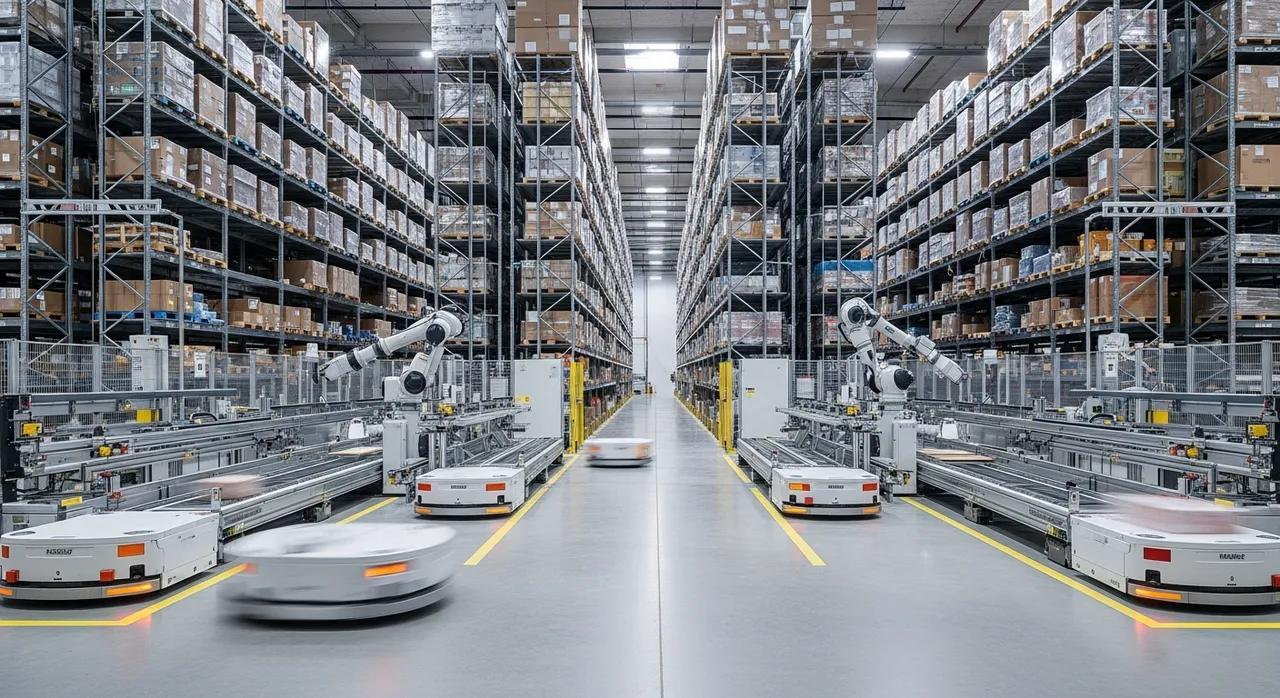
Automation can support several activities, including transporting goods, sorting packages, scanning inventory and assisting workers with order picking.
Autonomous mobile robots can move materials around suitable facilities, while automated storage systems can help businesses use available warehouse space more efficiently.
Software is equally important. A robot may perform its physical task successfully, but the wider operation still depends on accurate inventory information, sensible scheduling and effective coordination with employees.
This creates opportunities for startups that specialise in connecting machines with existing warehouse management systems.
For example, a software company might help a warehouse operator monitor automated equipment, identify bottlenecks and determine where additional capacity would provide the greatest benefit.
Another startup could focus on integration, helping businesses introduce automation without replacing every existing system.
The commercial challenge is to demonstrate measurable improvements. Customers need to understand how the proposed system affects order accuracy, processing times, labour requirements, maintenance expenses and total operating costs.
A successful logistics automation solution must improve the performance of the entire process, not just the speed of one machine.
4. Agriculture: Bringing Robotics Beyond the Factory
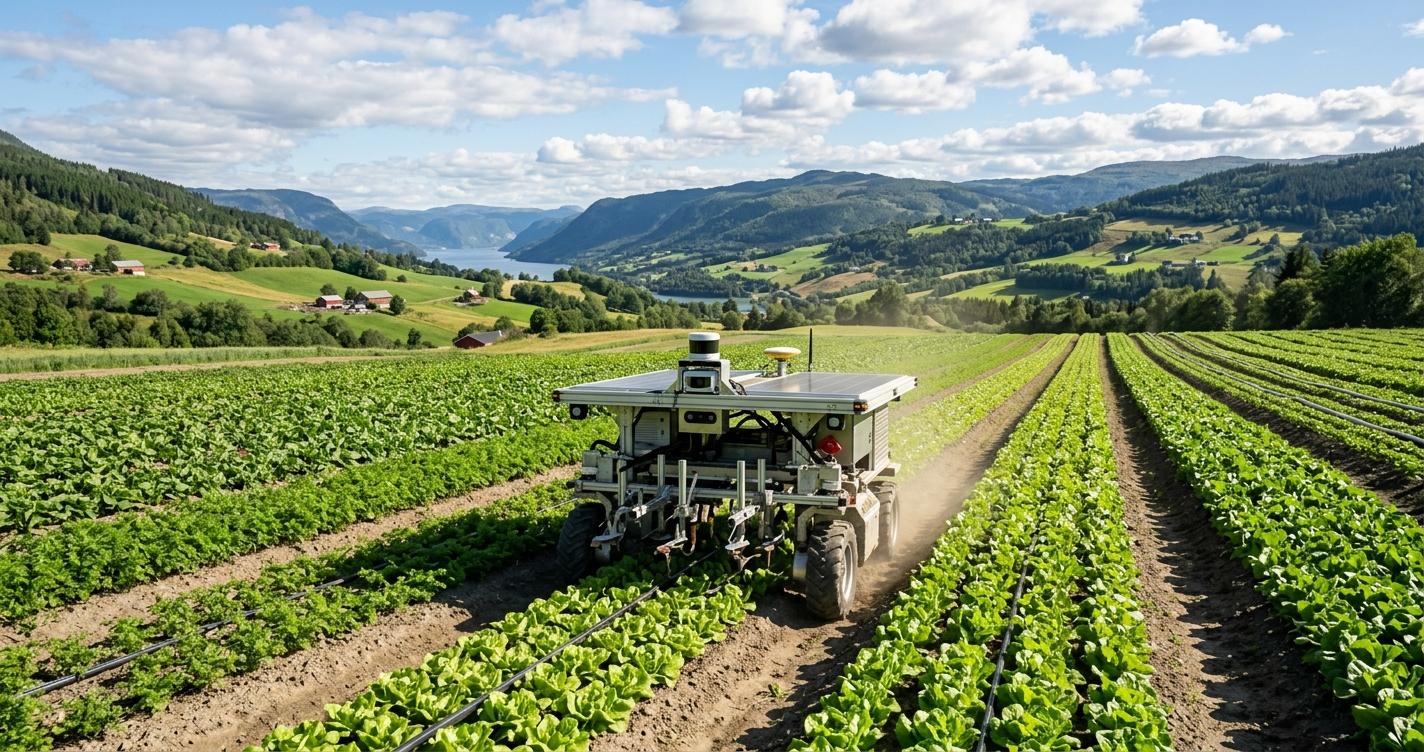
Agriculture offers another promising area for automation, particularly where businesses need to manage large areas of land, repetitive operations or time-sensitive harvesting activities.
Robotic systems can support selected tasks such as crop monitoring, precision spraying, harvesting assistance and weed identification. Sensors and computer vision can help machines distinguish between different objects or identify conditions that require attention.
These capabilities may allow farmers to target resources more precisely and reduce certain forms of unnecessary work.
For entrepreneurs, opportunities exist in both hardware and software.
A startup might develop a system that analyses crop images, integrate sensors with farm management platforms or provide automated monitoring services for specialised agricultural operations.
However, agricultural environments are challenging. Machines must cope with changing weather, uneven terrain, dust, moisture and variations between crops.
A technology that performs well in a controlled test may struggle when deployed across different farms.
Founders should therefore work closely with farmers, test equipment in realistic conditions and understand seasonal operating requirements before scaling their businesses.
Affordability is also essential. Agricultural customers need evidence that a solution can justify its purchase price, maintenance costs and training requirements.
Products that can be introduced gradually may be more attractive than systems requiring an entire farm to change its operating model at once.
5. Healthcare and Service Robotics
Robotics is also being explored in healthcare and other service environments.
Depending on the application, robotic systems can assist with tasks such as transporting supplies, supporting laboratory workflows, handling certain repetitive processes or helping clinicians perform specialised procedures.
In hospitals, for example, an autonomous delivery robot may transport selected supplies between designated areas. This can help staff spend less time on certain logistical activities, although the benefits depend on the building layout, workflow and reliability of the system.
Healthcare robotics is a demanding market because equipment must meet relevant safety, privacy and regulatory requirements. Products intended for medical purposes may face additional requirements depending on their design and intended use.
Entrepreneurs should not assume that a successful prototype can immediately be sold to hospitals.
They may need clinical or operational validation, specialist partnerships, cybersecurity controls and evidence that the product fits existing healthcare workflows.
For early-stage startups, focusing on a clearly defined support function may provide a more manageable starting point than attempting to develop a complex medical robot.
The underlying principle remains the same: technology must address a real need and demonstrate its value in the environment where it will be used.
6. Automation Is Not Only for Large Companies
One of the most interesting opportunities is helping small and medium-sized businesses access automation.
Large companies may have dedicated engineering teams and the resources to invest in customised equipment. Smaller businesses often cannot justify similar investments, even when they face the same operational challenges.
This gap creates opportunities for startups that offer affordable, modular solutions.
For example, a small packaging business might need an automated labelling system rather than a complete production line. A local distributor might benefit from barcode scanning and automated inventory updates before considering warehouse robots.
In some cases, improving the surrounding software and workflow may deliver more value than introducing physical automation immediately.
Entrepreneurs can make adoption easier by offering installation, training, maintenance and technical support alongside the equipment.
Flexible commercial models may also help customers manage costs. Depending on the product, a provider might offer equipment leasing, subscription-based software or a service contract.
These models are not suitable for every application, but they can reduce the burden of purchasing and maintaining a complex system.
For startups, the advantage lies in making useful technology accessible to customers who have traditionally been underserved by major automation providers.
7. The Human Side of Automation
Automation discussions often focus on machines, speed and cost savings. Yet employees are central to whether an implementation succeeds.
Introducing new technology can change responsibilities, workflows and the skills required for particular jobs. If employees are not involved in the process, they may be uncertain about the purpose of the change or reluctant to trust the new system.
Businesses should explain what the technology is intended to improve and provide appropriate training.
Employees may need to learn how to supervise equipment, respond to faults, interpret system alerts or maintain automated workflows. Their experience can also help identify problems that designers overlooked.
In many applications, the strongest approach combines machine consistency with human judgement.
A robot might perform repetitive movements while an employee handles unusual situations, checks quality or makes decisions that require context.
Startups that understand this relationship can build better products and offer more effective implementation services.
They should also consider safety from the beginning. Industrial robots, mobile machines and collaborative systems require appropriate risk assessments, protective measures and operating procedures. European customers may need to comply with applicable machinery and workplace safety legislation.
Responsible implementation is part of a sound commercial strategy, not an optional extra.
8. How Startups Can Enter the Robotics Market
Building a robotics company can be technically demanding and capital-intensive, but founders do not necessarily need to begin by designing a robot from scratch.
A focused market entry strategy can help reduce risk.
Step one: Choose an industry. Identify a sector where you understand the customer, the workflow and the cost of the problem.
Step two: Identify a repetitive task. Look for activities that are time-consuming, physically demanding, error-prone or difficult to scale.
Step three: Validate customer demand. Interview potential buyers and observe their existing processes. Determine whether the problem is serious enough to justify investment.
Step four: Explore existing technology. Assess whether commercially available robots, sensors or software can solve the problem. Building everything yourself may be unnecessary.
Step five: Develop a small pilot. Test the proposed solution in a limited environment and agree on measurable performance targets with the customer.
Step six: Evaluate the economics. Calculate equipment, integration, maintenance, training and operating costs. Compare them with realistic benefits.
Step seven: Build a repeatable service. Once the solution works reliably, standardise installation, support and maintenance so the business can serve additional customers.
This approach allows entrepreneurs to learn from real deployments before committing to large-scale production or expansion.
9. Europe's Innovation Ecosystem and Future Opportunities
Europe has established industrial clusters, engineering expertise, universities, research institutions and technology companies that can support robotics innovation.
For startups, partnerships with manufacturers and research organisations may provide access to specialist knowledge, testing environments and potential customers.
The European Commission's Horizon Europe programme supports research and innovation across multiple fields, including relevant digital and industrial technologies. However, funding opportunities depend on the specific call, applicant eligibility and project requirements.
Founders should investigate available support carefully and avoid building their entire business plan around funding that has not been secured.
Commercial partnerships can be just as important. An established manufacturer may help a startup test equipment, while a systems integrator may provide access to customers and expertise in industrial deployment.
The most valuable relationships are those that help turn promising technology into a reliable product with a clear market.
Conclusion: The Future of Automation Is About Solving Practical Problems
Robotics and automation are creating opportunities across European manufacturing, logistics, agriculture, healthcare and small business operations.
For entrepreneurs, the market extends far beyond developing sophisticated machines. There is room for companies that build specialised software, integrate existing equipment, simplify adoption and provide the services required to keep automated systems running reliably.
However, successful innovation requires more than technical capability. Founders must understand their customers, test their solutions in real environments, evaluate financial viability and consider safety and employee needs.
The best starting point is often a specific task that consumes too much time, creates avoidable errors or limits a business's ability to grow.
By solving that problem effectively, startups can build a foundation for wider expansion.
Automation is not simply about making machines do more. It is about helping people and businesses work more effectively, consistently and safely.
For European entrepreneurs willing to combine technical knowledge with practical business thinking, that creates a compelling opportunity to build the next generation of industrial and service innovation.